
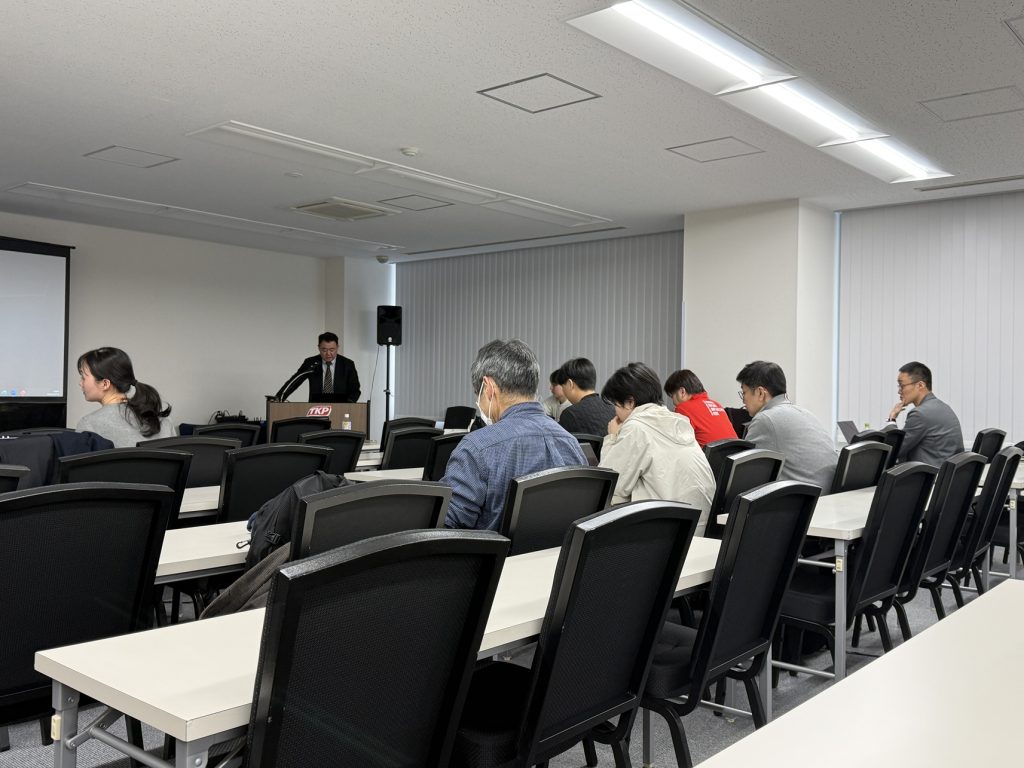
2026年3月10日、TKP札幌北口カンファレンスセンターにて、シンポジウム**「放牧畜産のスマート化の未来と次世代への農業教育の可能性」をハイブリッド形式で開催いたしました。
今回のシンポジウムは、私たちが目指すCOI-NEXTプロジェクトの「本格型」への昇格に向けた決意を込めた、極めて重要な節目となるイベントとなりました。
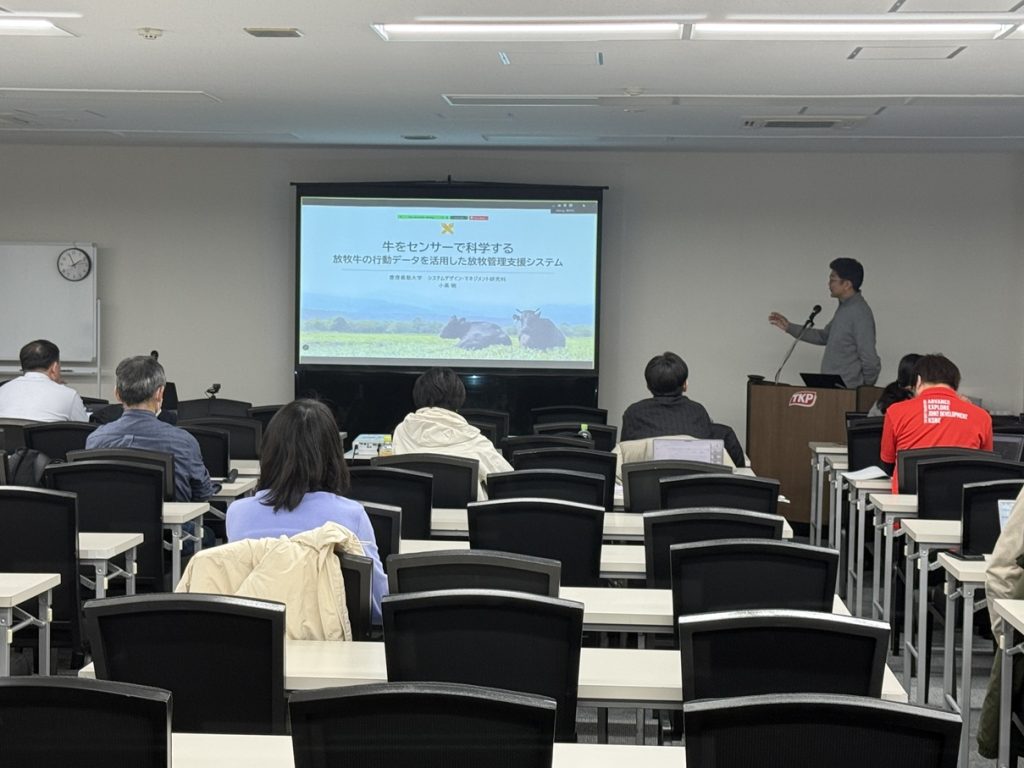
プロジェクトの進化:新体制で挑むスマート放牧(研究課題2)
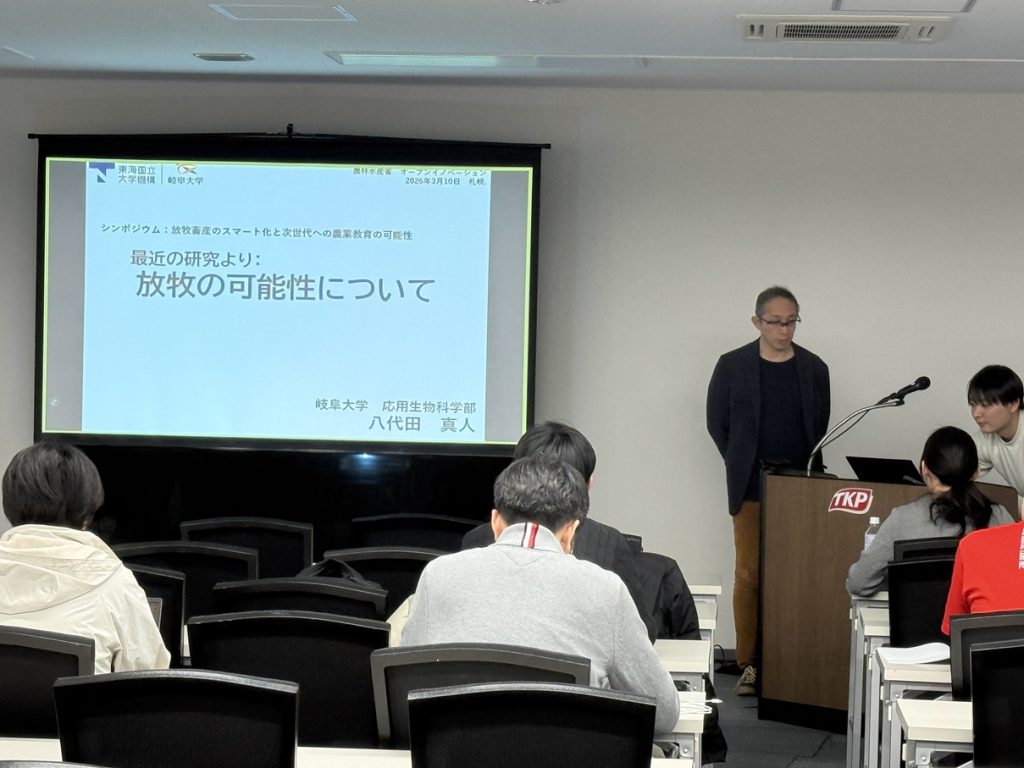
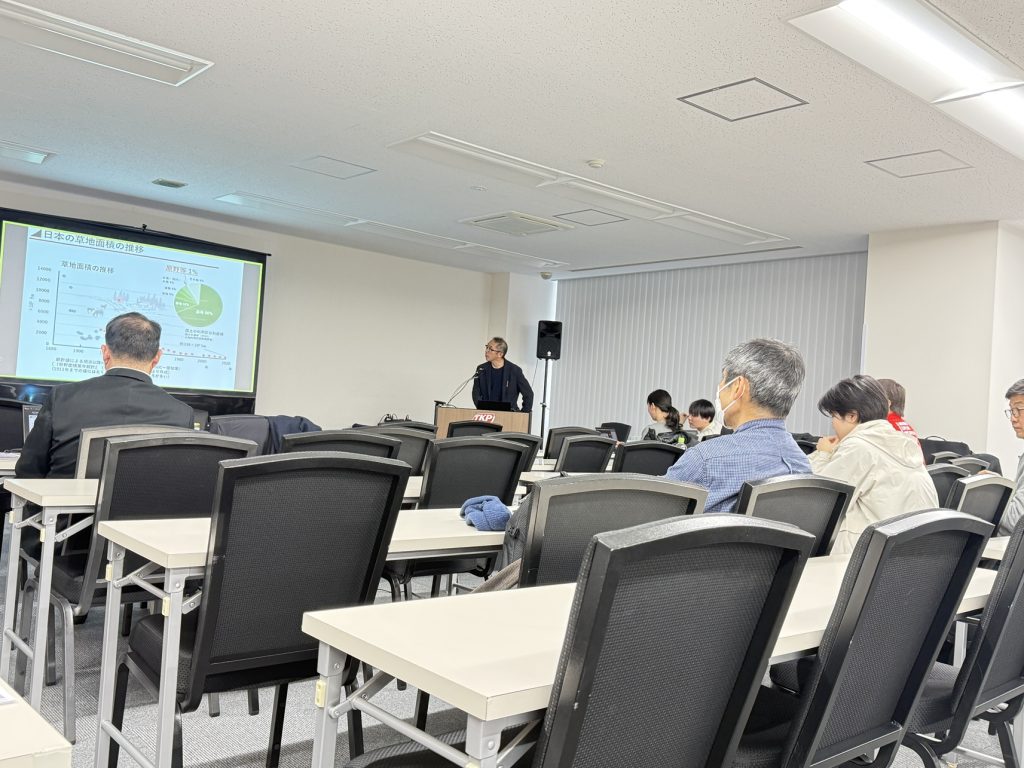
本格型への移行を見据え、研究開発課題2「次世代の循環型スマート放牧肥育システムの開発」はさらなる強化を図ります。今回のシンポジウムでは、この課題の新たなリーダーに就任された岐阜大学の八代田真人教授をお招きし、基調講演をいただきました。
八代田先生からは、最新の研究に基づく「放牧の可能性」について、GNSS測位やウェアラブルセンサーを用いた精密な家畜管理技術の最前線をお話しいただきました。これは、本拠点が掲げる「ウシを大地を耕すバイオリアクターと捉える」という哲学を具現化するための、大きな推進力となります。
日米の視点から描く「次世代教育」の未来(研究課題5)
本格型における大きな柱の一つが、ターゲット2に掲げる「次世代教育プラットフォームの構築」です。この学びの部分を深掘りするため、教育に関わるスペシャリストにご登壇いただきました。
- COI-NEXT本格型から参画して頂く福岡教育大学の平尾健二教授からは、日本の義務教育における農業教育の現状と子どもたちへの農業の教育について基調講演をいただきました。今回は残念ながらビデオ講演となってしまいましたが、講演の中では、本拠点のプロジェクトリーダー(PL)である後藤貴文教授(北海道大学)との10年以上にわたる連携についても詳しく紹介されました。 実は両先生は、佐賀県鹿島市にて、教育課程の一環として「スマート畜産」を教える現地実習を毎年共同で実施しています。後藤教授が自ら毎年現地へ赴き、「先生の卵」である学生たちに直接講義や実技指導を行うこの取組は、まさに本プロジェクトが目指す「学びと実践の循環」の先駆けといえるものです。長年の確かな積み重ねに基づいた、次世代を担う子どもたちへの農業教育の重要性についての平尾先生のお話は、参加者に深い感銘を与えました。
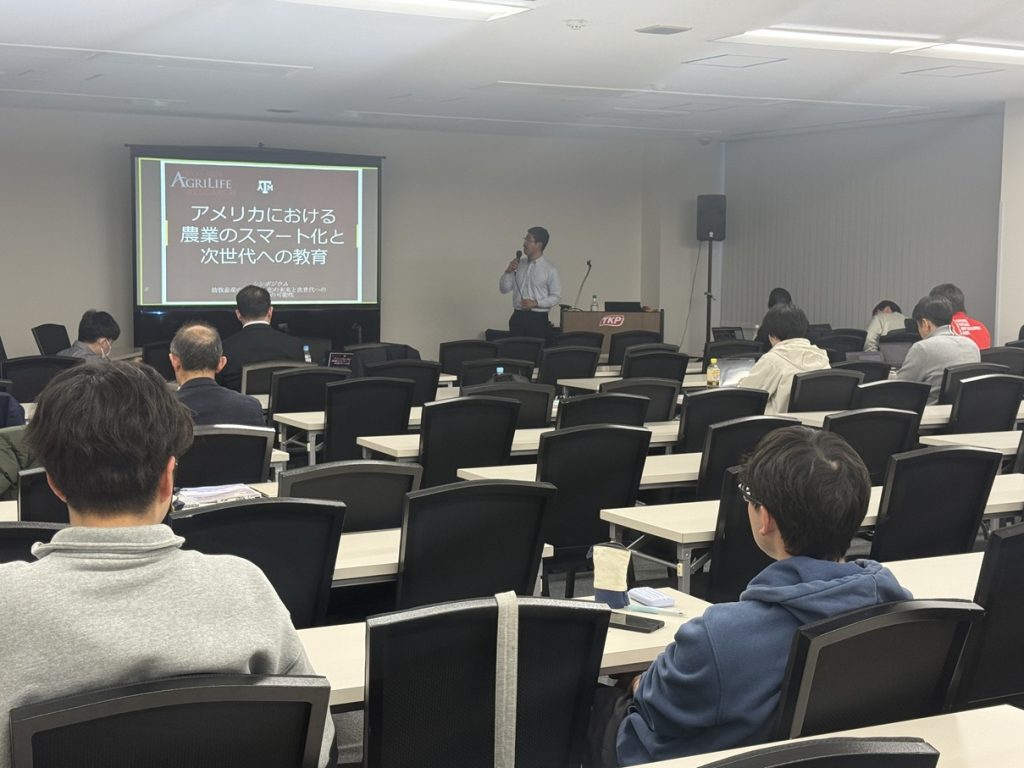
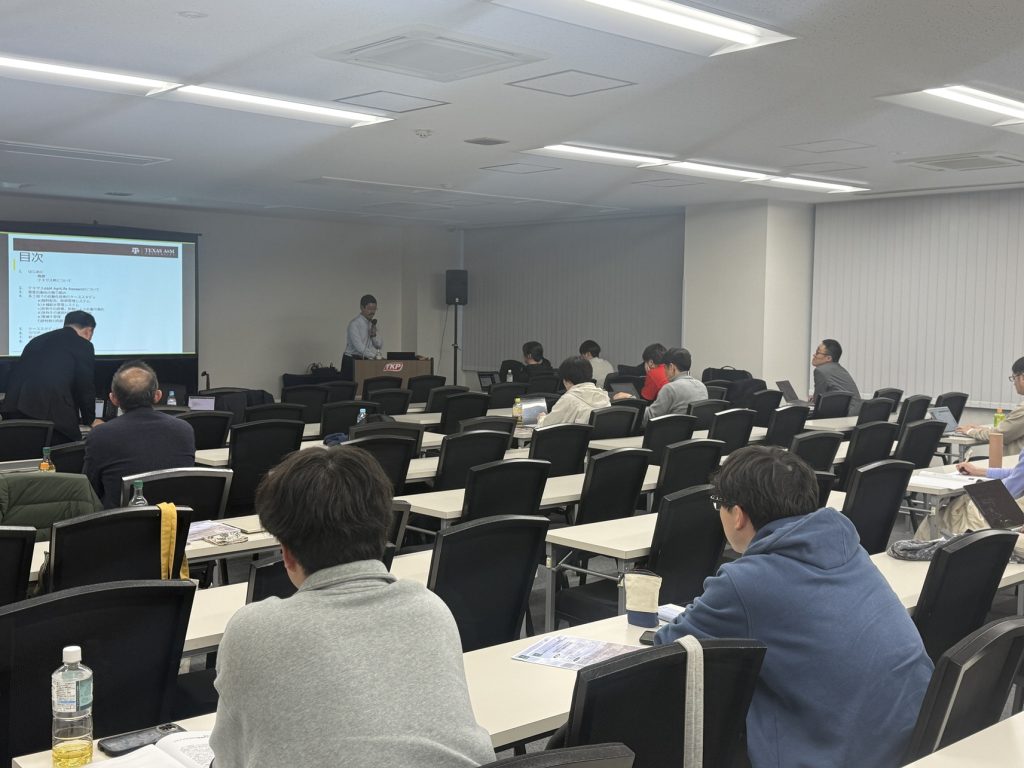
- これに対応する形で、アメリカからテキサスA&M大学の豊永健太郎さんに講演いただきました。アメリカの大規模牧場「キングランチ」における近隣大学との教育提携事例や、自動化技術が若者の就農ハードルをいかに下げるかといった実践的なお話は、日本版のモデルを構築する上での貴重なヒントとなりました。
本格型へ:「ウシと紡ぐ地球と命の絆」の実現に向けて
今回のシンポジウムを通じて、スマート技術(課題2)と教育・人材育成(課題5)が両輪となり、地域に根ざした持続可能な循環社会を創る道筋がより明確になりました。
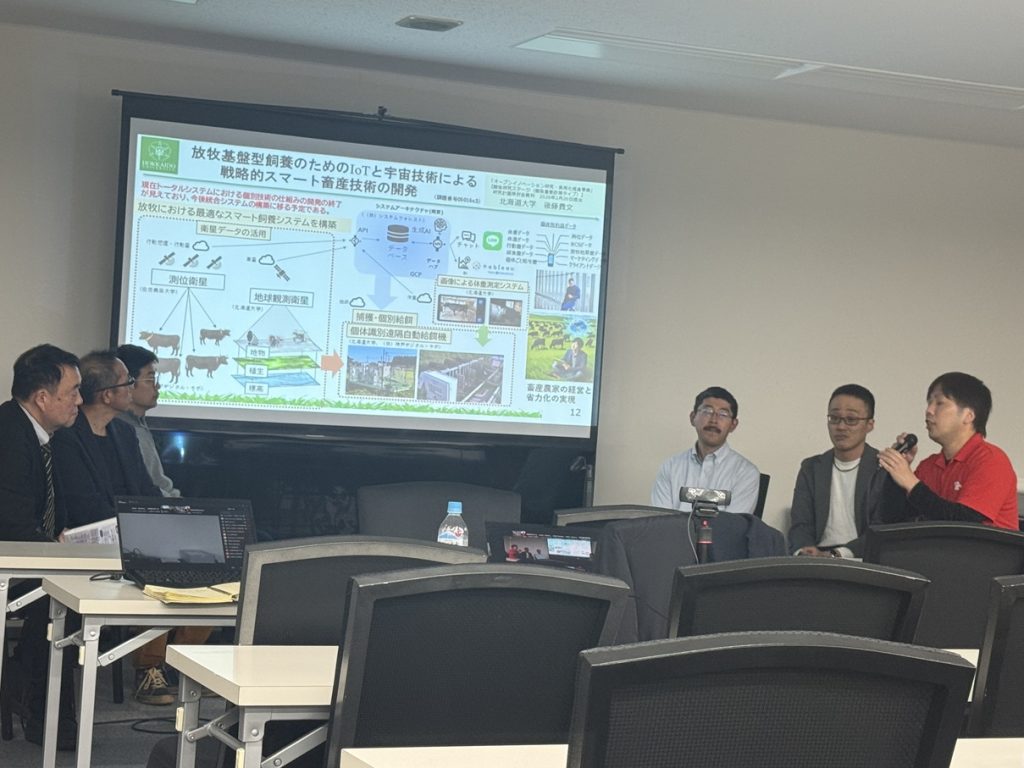
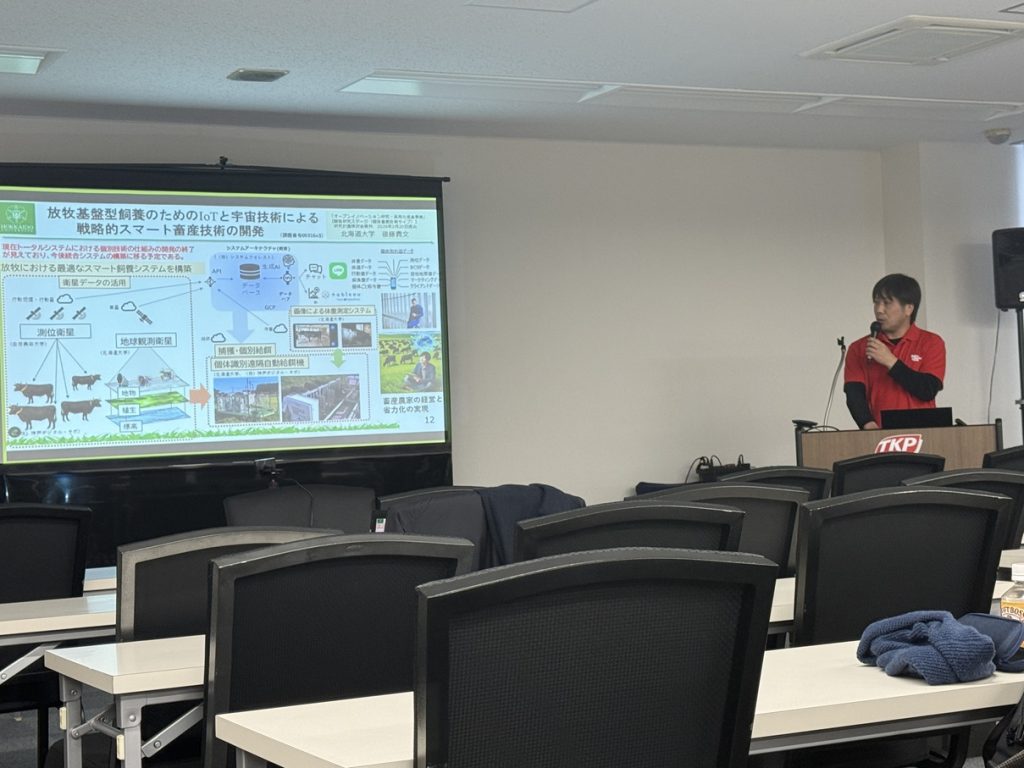
プロジェクトリーダーの後藤貴文教授(北海道大学)からは、白老町をモデルとしたスマート放牧管理システムが、いかに農家のライフスタイルを変革し、デジタルネイティブ世代にとって魅力的な産業となり得るかという展望が語られました。
私たちは本格型において、これらの取組を国際水準での検証へと繋げ、世界に通用する国際基準への適合を目指してまいります。
ご参加いただいた皆様、そして熱いご講演をいただいた先生方に心より感謝申し上げます。デジタルネイティブ世代が先導する「食の尊さを未来へつなぐ循環社会」の創造へ向け、一歩ずつ、確実に歩みを進めてまいります。
Symposium Report: Toward Realizing “The Bond Between Cattle, the Earth, and Life”! ~Creating Next-Generation Circular Livestock Farming Through Smart Technology and Education~
On March 10, 2026, we held a hybrid symposium titled “The Future of Smart Pasture-Based Livestock Farming and the Potential for Agricultural Education for the Next Generation” at the TKP Sapporo North Exit Conference Center.
This symposium marked a crucial milestone, reflecting our determination to elevate the COI-NEXT Project—which we are striving to advance—to a “full-scale” initiative.
Project Evolution: Smart Pasturing Under a New Management Structure (Research Topic 2)
With an eye toward transitioning to a full-scale system, we will further strengthen Research and Development Project 2: “Development of a Next-Generation Circular Smart Pasture-Based Fattening System.” For this symposium, we invited Professor Masato Yayota of Gifu University, who has recently assumed the role of leader for this project, to deliver the keynote address.
Professor Masato Yayota spoke about the “potential of grazing” based on the latest research, highlighting the cutting-edge advancements in precision livestock management using GNSS positioning and wearable sensors. This serves as a major driving force in realizing the philosophy championed by our center: “viewing cattle as bioreactors that till the land.”
The Future of “Next-Generation Education” from Japanese and American Perspectives (Research Topic 5)
One of the key pillars of the full-scale initiative is “Building a Next-Generation Education Platform,” as outlined in Target 2. To explore this aspect of learning in greater depth, we invited specialists in the field of education to speak at the event.
*Professor Kenji Hirao of Fukuoka University of Education, who will join this project in fiscal year 2026 when full-scale operations begin through the COI-NEXT, delivered a keynote speech on the current state of agricultural education in Japan’s compulsory education system and agricultural education for children. Unfortunately, this was a video presentation, but during it, Professor Hirao spoke in detail about his more than 10 years of joint research with Professor Takafumi Gotoh (Hokkaido University), the Project Leader (PL) of this hub. In fact, the two professors jointly conduct annual field training sessions in Kashima City, Saga Prefecture, where they teach “Smart Livestock Farming” as part of the curriculum. This initiative, in which Professor Gotoh personally visits the site every year to deliver lectures and provide hands-on instruction to students—who are “future teachers”—can truly be called a pioneer of the “cycle of learning and practice” that this project aims to achieve. Professor Hirao’s talk on the importance of agricultural education for the next generation of children, based on many years of solid experience, left a deep impression on the participants.
*In response to this, we invited Kentaro Toyonaga from Texas A&M University in the United States to give a lecture. His practical insights—including examples of educational partnerships with nearby universities at the large-scale U.S. ranch “King Ranch” and how automation technology can lower the barriers to entry for young people entering the agricultural sector—provided valuable guidance for developing a Japanese model.
Moving Toward a Comprehensive Approach: Realizing “The Bond Between Cattle, the Earth, and Life”
Through this symposium, it has become clearer that smart technologies (Challenge 2) and education and human resource development (Challenge 5) serve as two wheels driving the creation of a sustainable, circular society rooted in the local community.
Professor Takafumi Gotoh (Hokkaido University), the project leader, shared his vision of how a smart grazing management system modeled after Shiraoi Town could transform farmers’ lifestyles and become an attractive industry for the digital native generation.
In the full-scale implementation phase, we will build on these initiatives to conduct verification at the international level, aiming to meet globally recognized standards.
We would like to express our heartfelt gratitude to all participants and to the professors who delivered such inspiring presentations. We will continue to move forward, step by step and with determination, toward the creation of a “circular society that passes on the value of food to future generations,” led by the digital native generation.