国際ワークショップ「Exploring the Future of Cattle Production」を開催しました
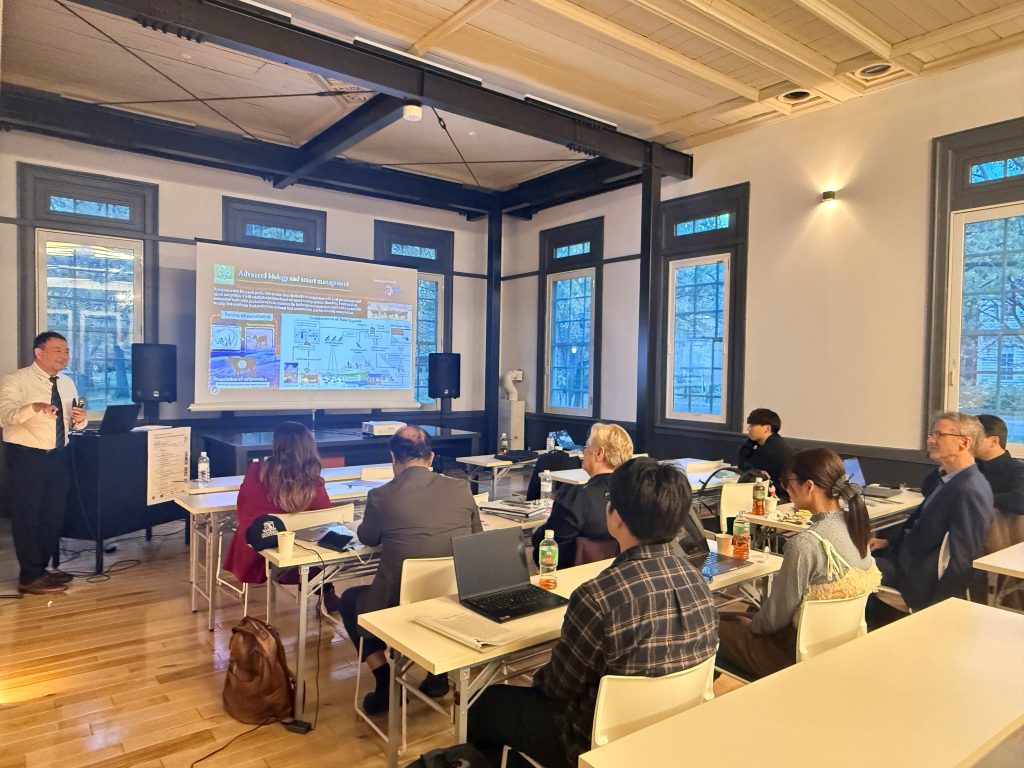
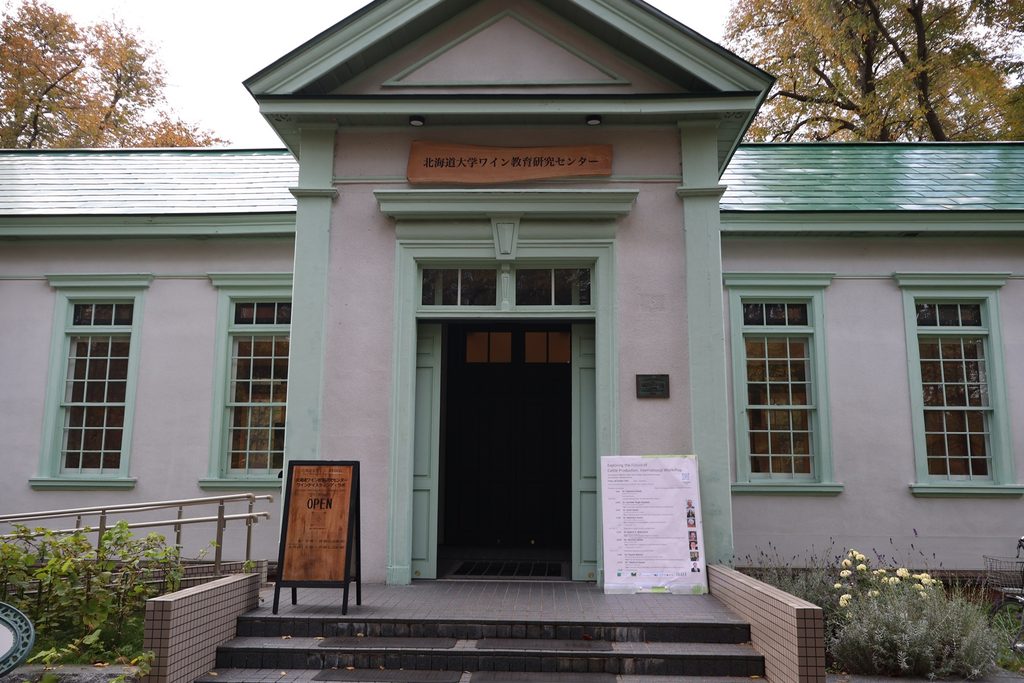
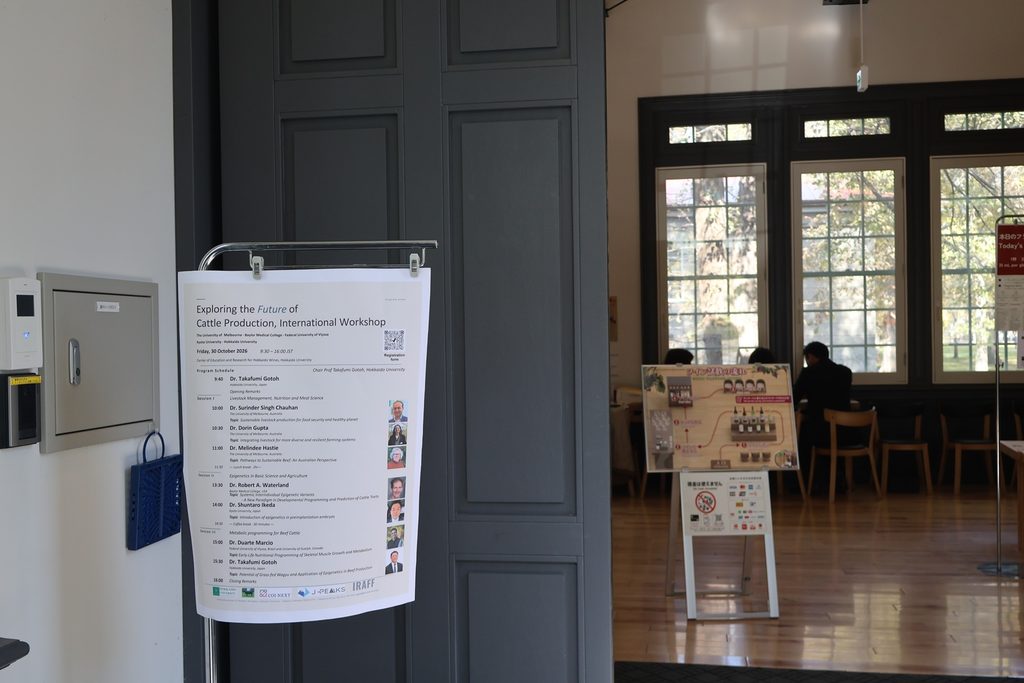
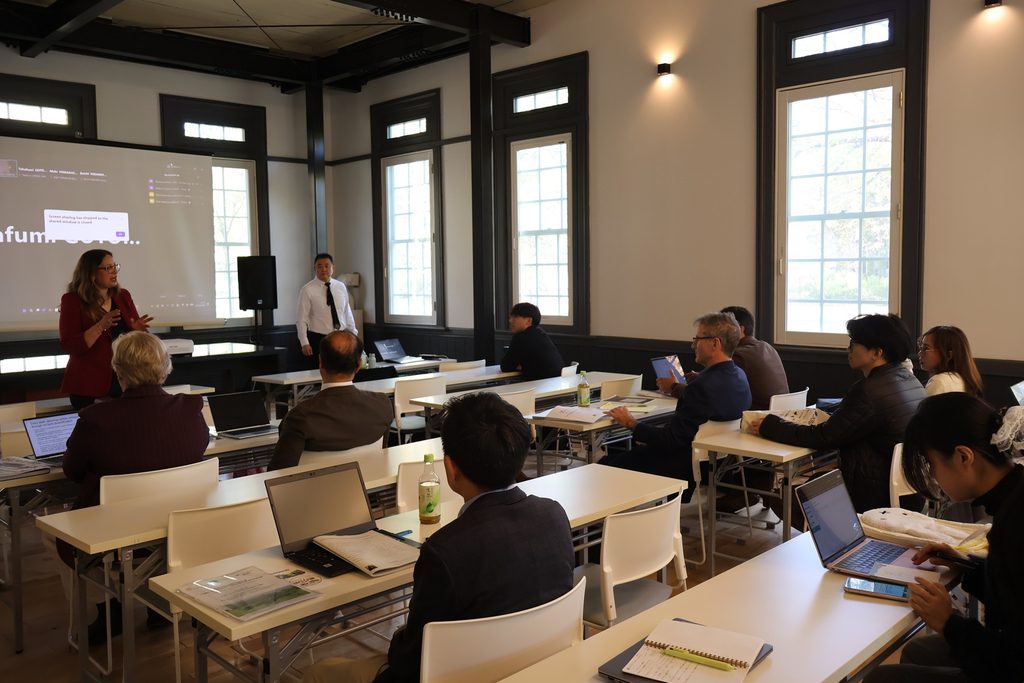
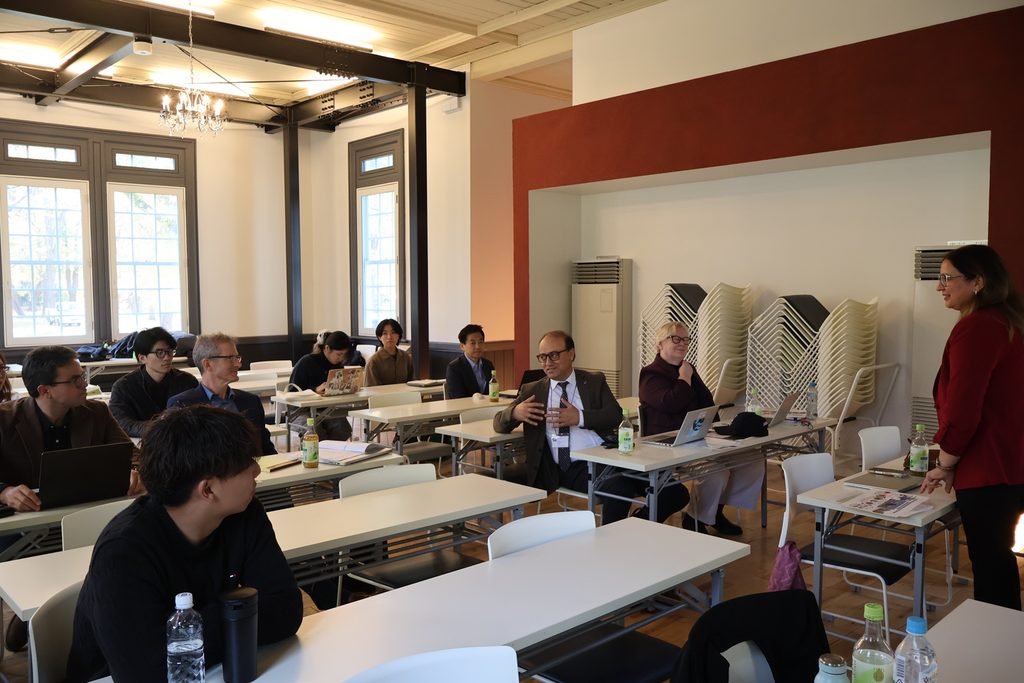
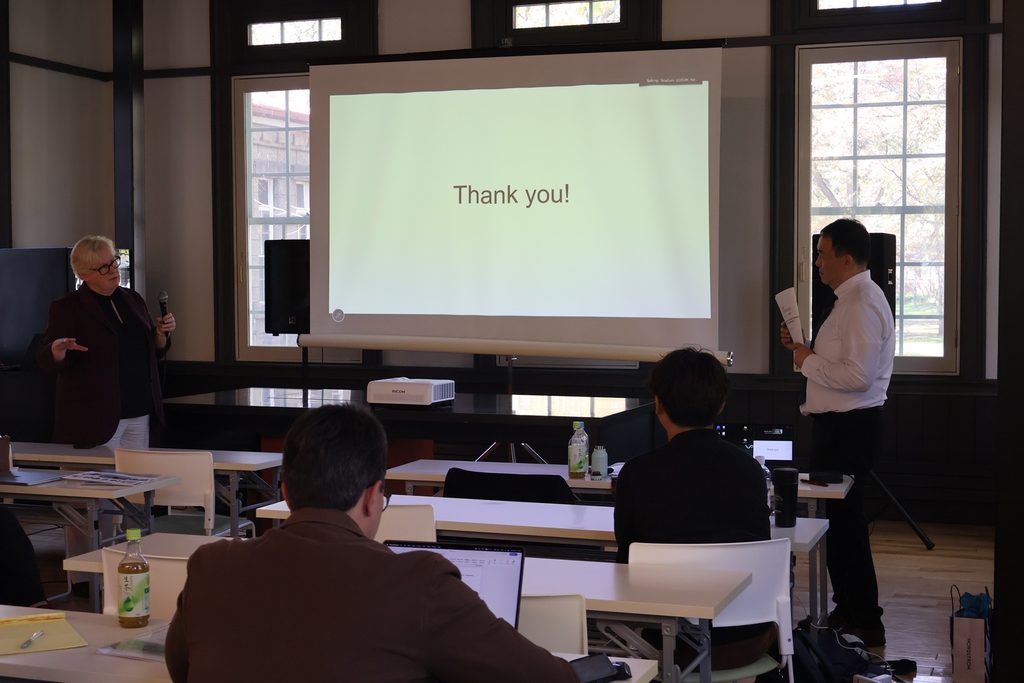
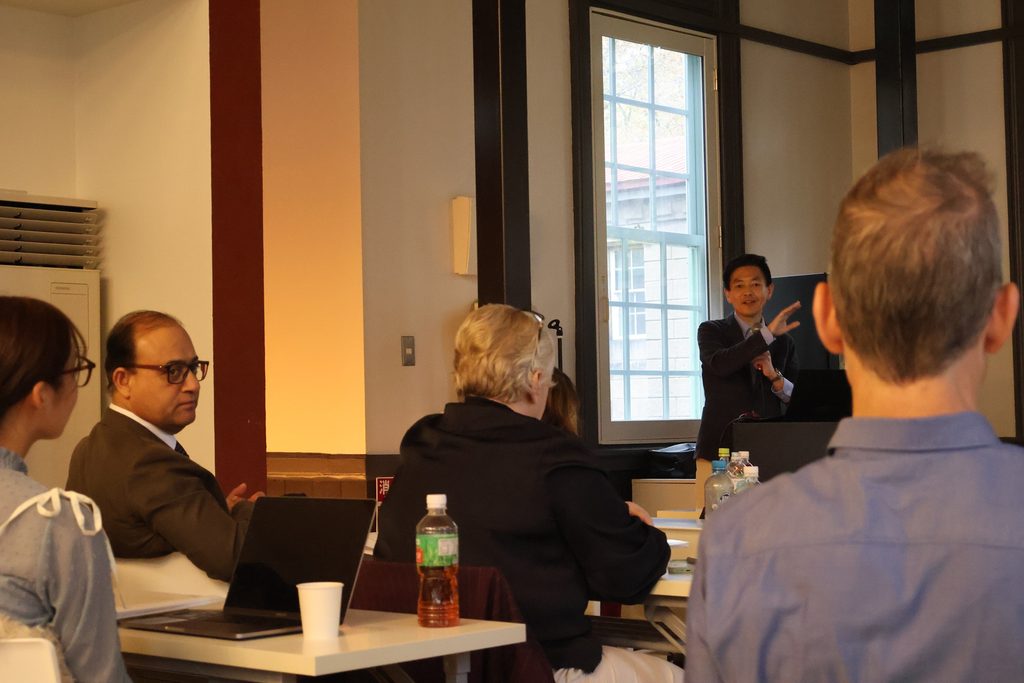
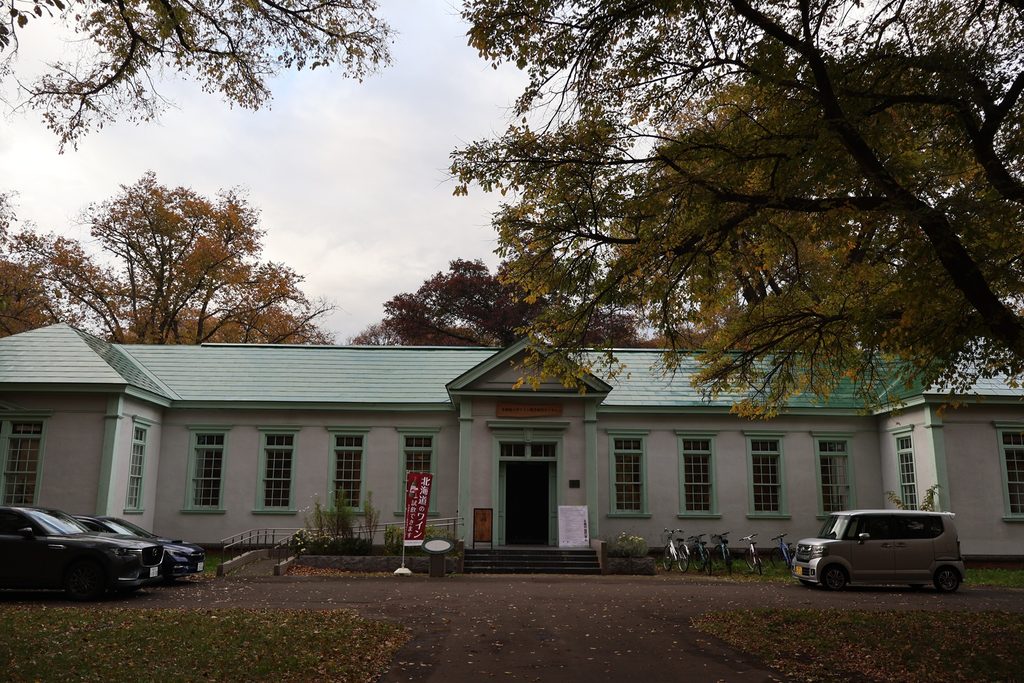
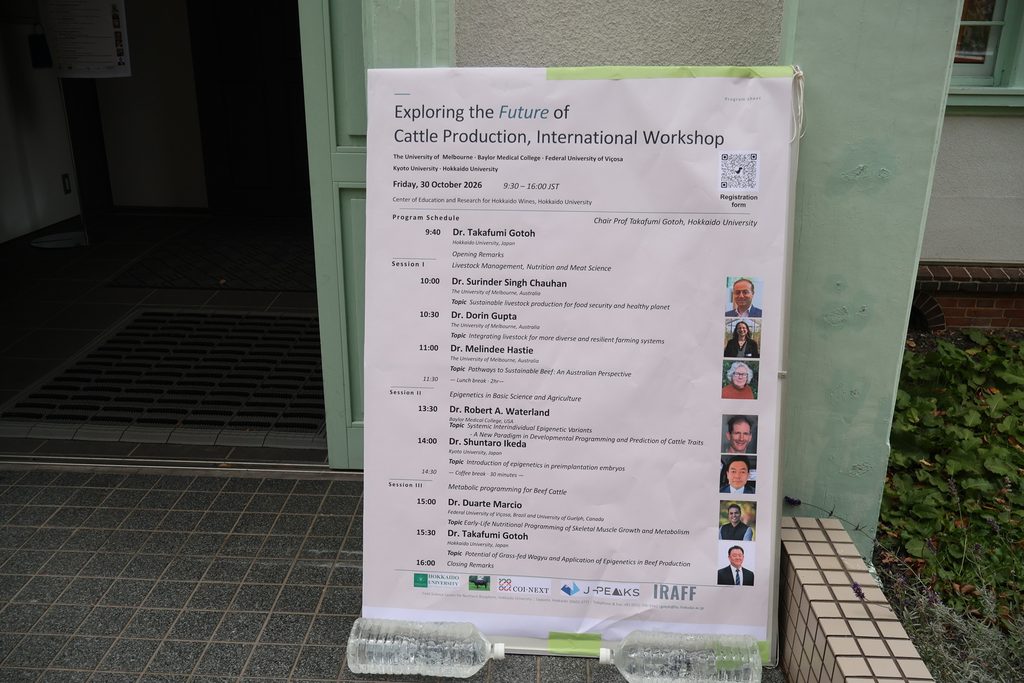
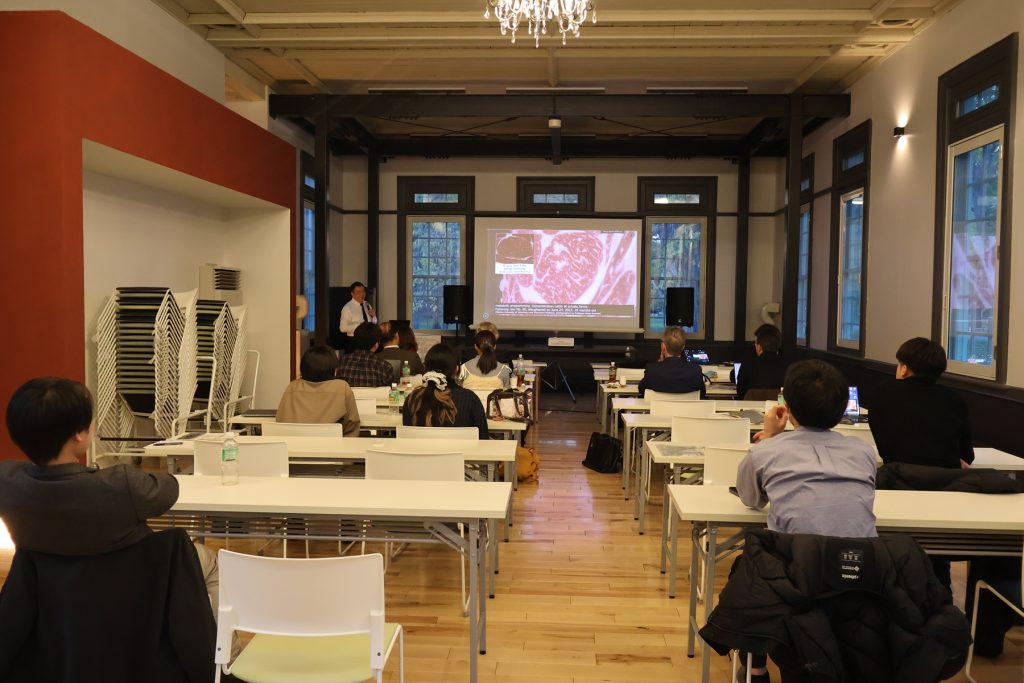
2026年10月30日、北海道大学において、COI-NEXT「次世代和牛生産システム構築拠点」は、北海道大学J-PEAKSとの共催により、国際ワークショップ「Exploring the Future of Cattle Production」を開催しました。
本ワークショップでは、米国、オーストラリア、ブラジル、カナダおよび日本の研究者が参加し、持続可能な畜産、肉質評価、エピジェネティクス、代謝プログラミングなどについて、最新の研究成果を共有するとともに、今後の研究連携に向けた意見交換を行いました。
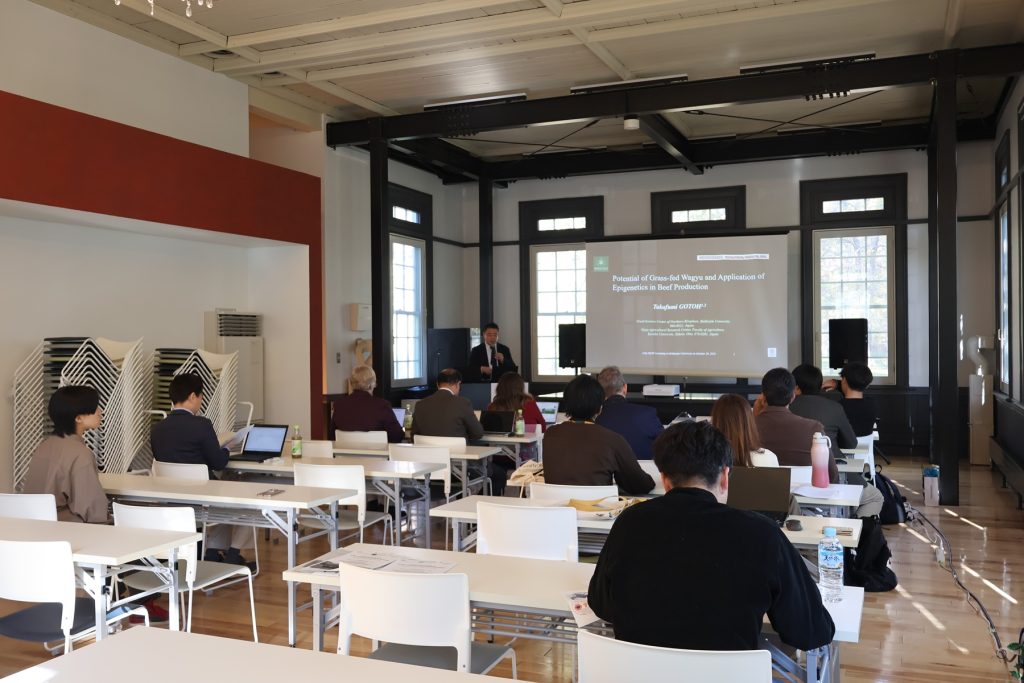
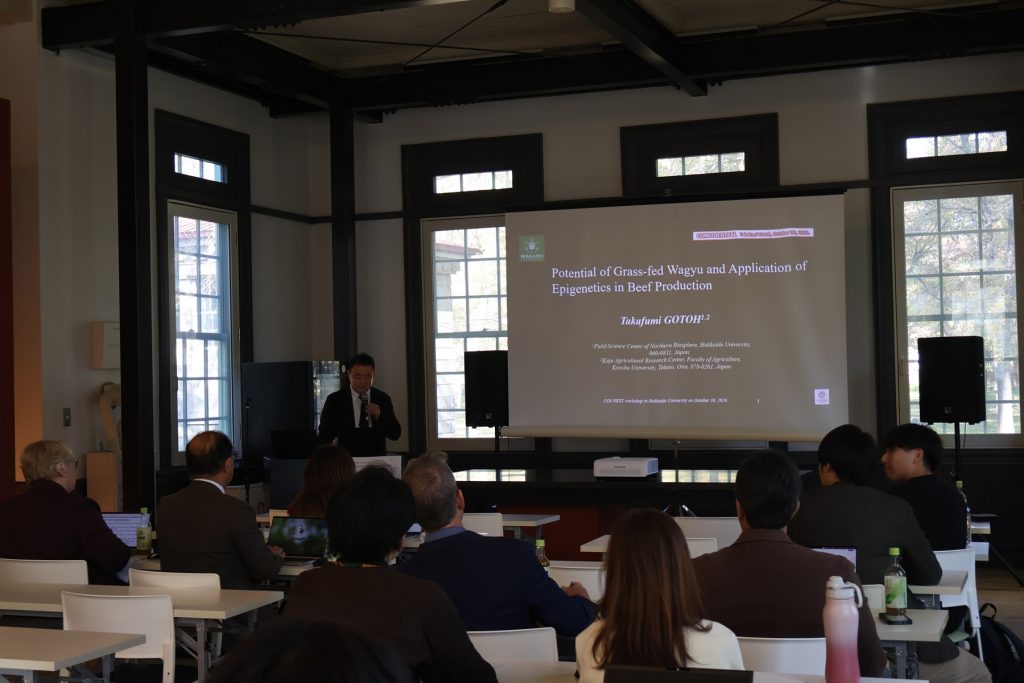
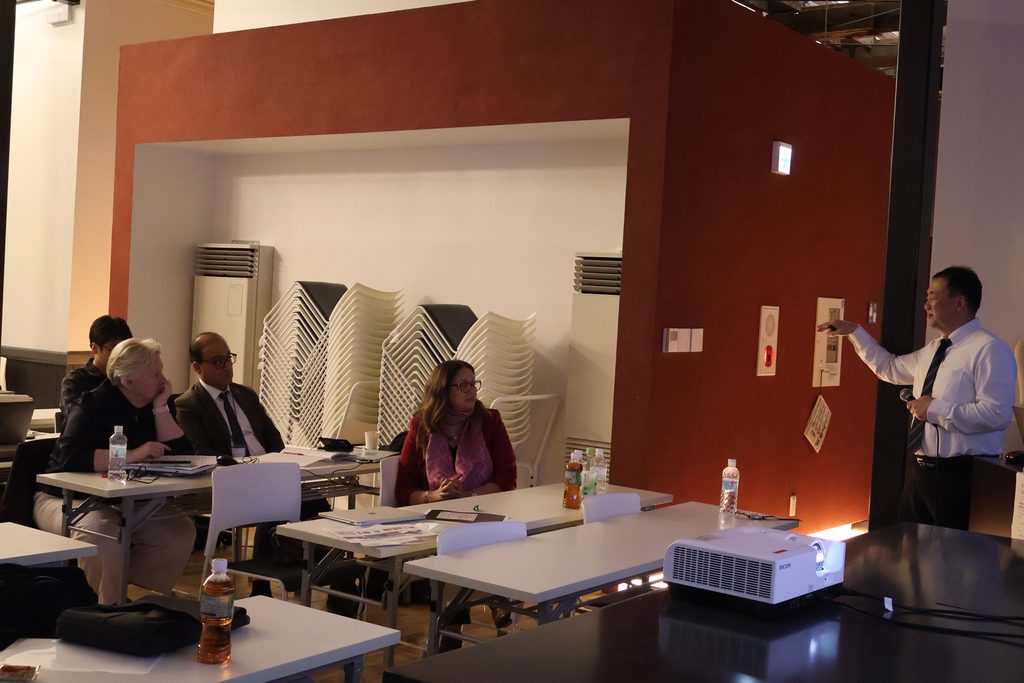
はじめに、本拠点のプロジェクトリーダーである北海道大学の後藤貴文教授が開会挨拶を行い、持続可能な牛肉生産の実現に向けた研究の方向性と、分野や国境を越えた研究交流の意義について述べました。
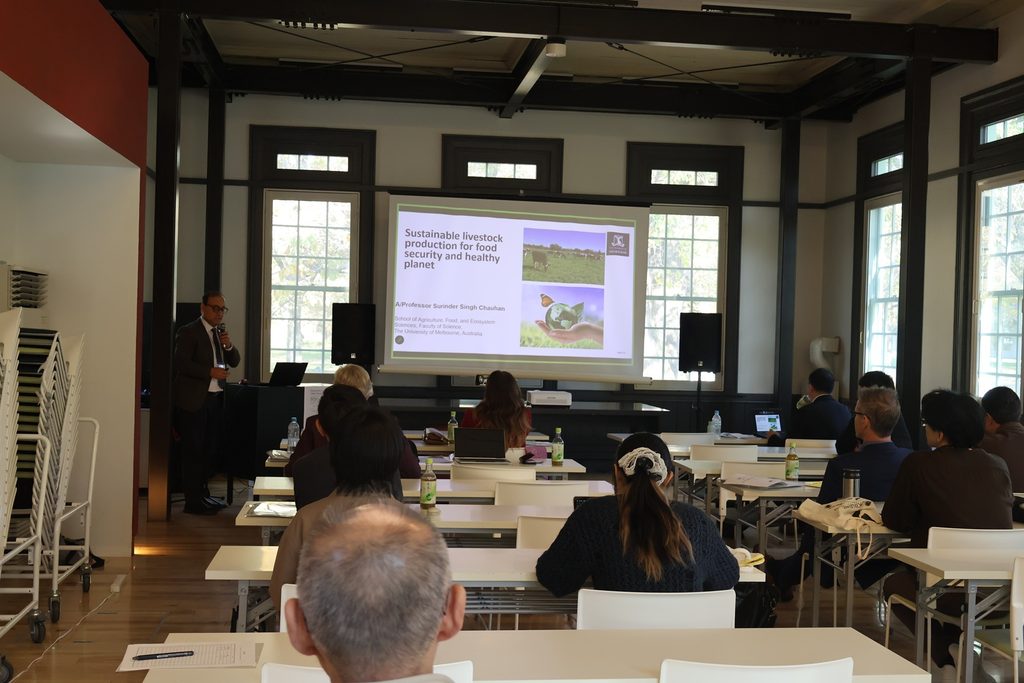
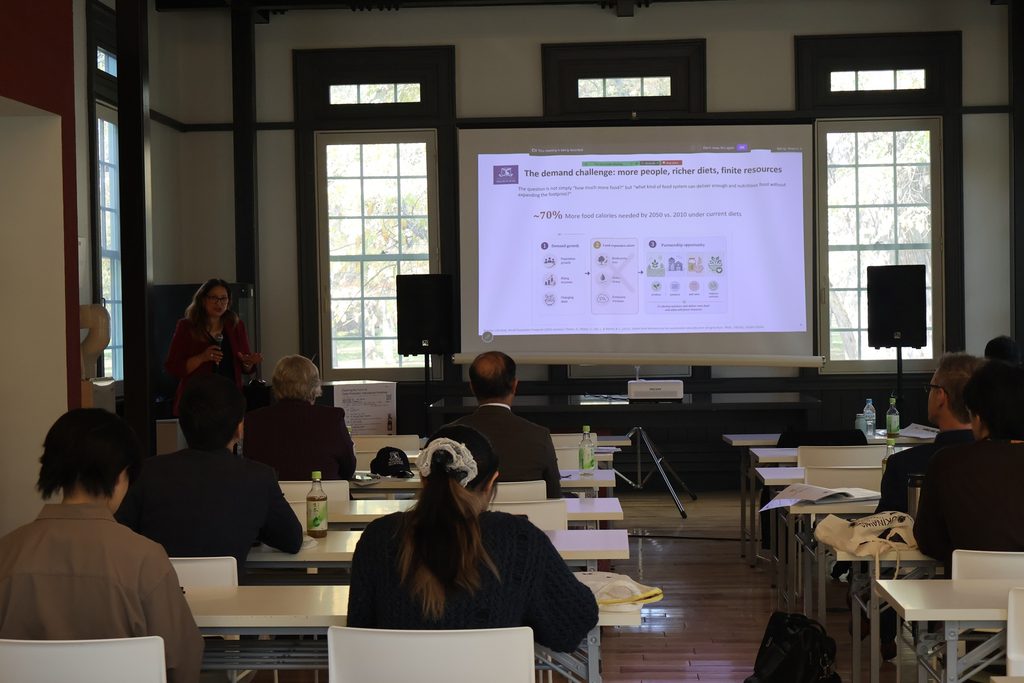
最初のセッションでは、メルボルン大学のSurinder Singh Chauhan先生から、持続可能な畜産と食料安全保障をテーマに、植物由来成分を活用した家畜のメタン排出削減や、暑熱ストレスへの対応などの研究が紹介されました。続いて、同大学のDorin Gupta先生は、オーストラリアの小麦畑における羊の放牧や、サモアのタロイモ畑での羊を活用した雑草管理について報告し、作物栽培と家畜生産を組み合わせた農業システムの可能性を示しました。また、Melindee Hastie先生は、牛肉の持続可能性に関する認証制度と消費者の信頼、Meat Standards Australia(MSA)による食味品質評価、グラスフェッド牛肉と穀物肥育牛肉の風味や消費者の感情的評価に関する研究を紹介しました。
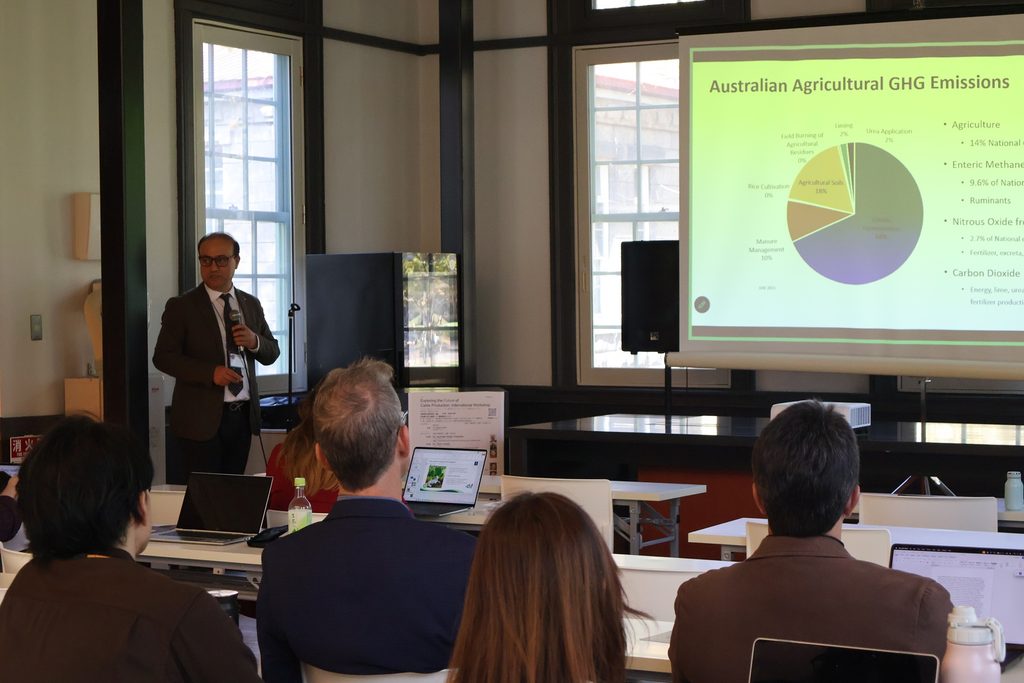
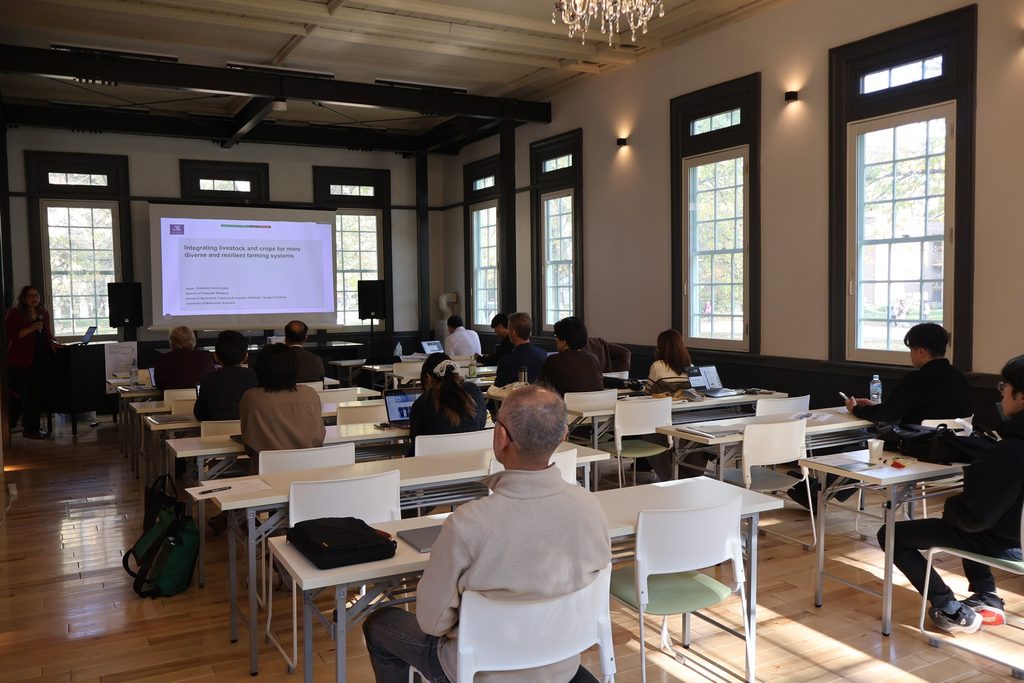
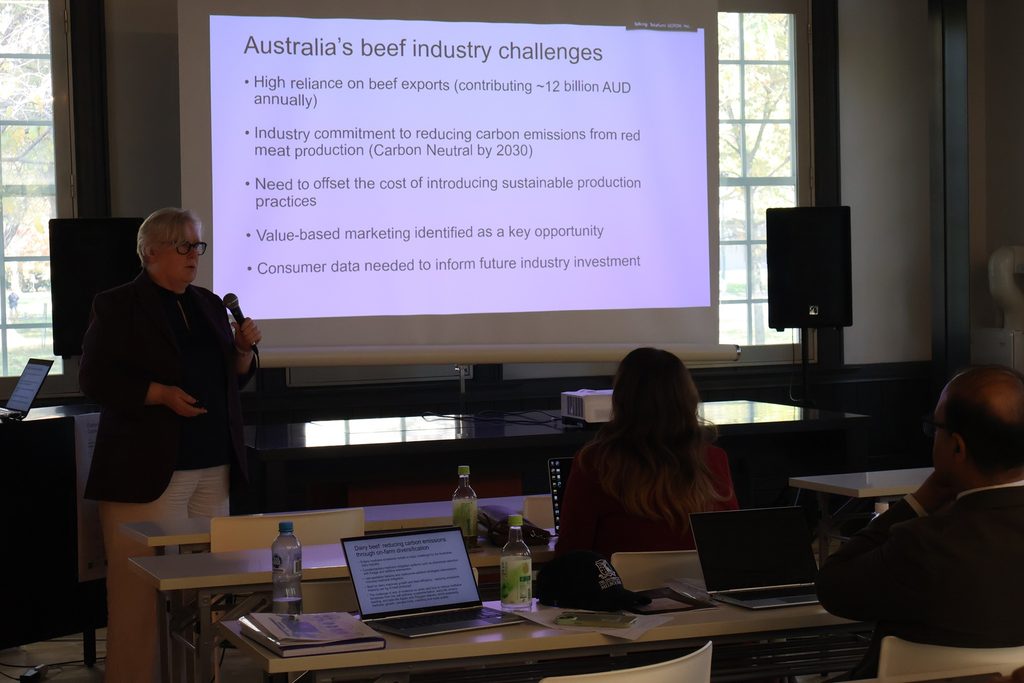
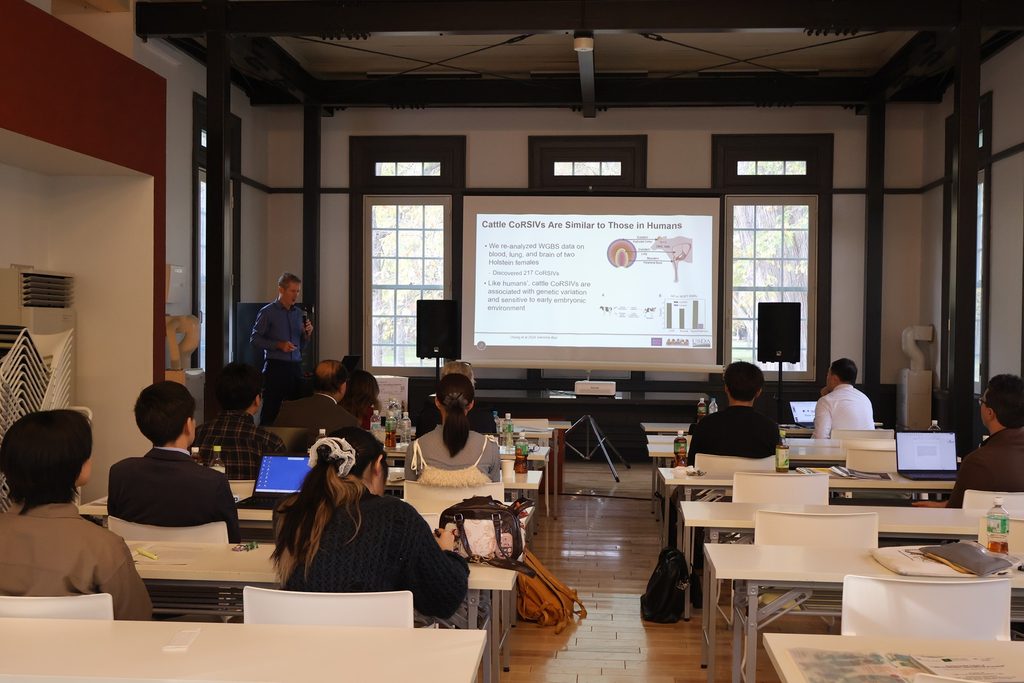
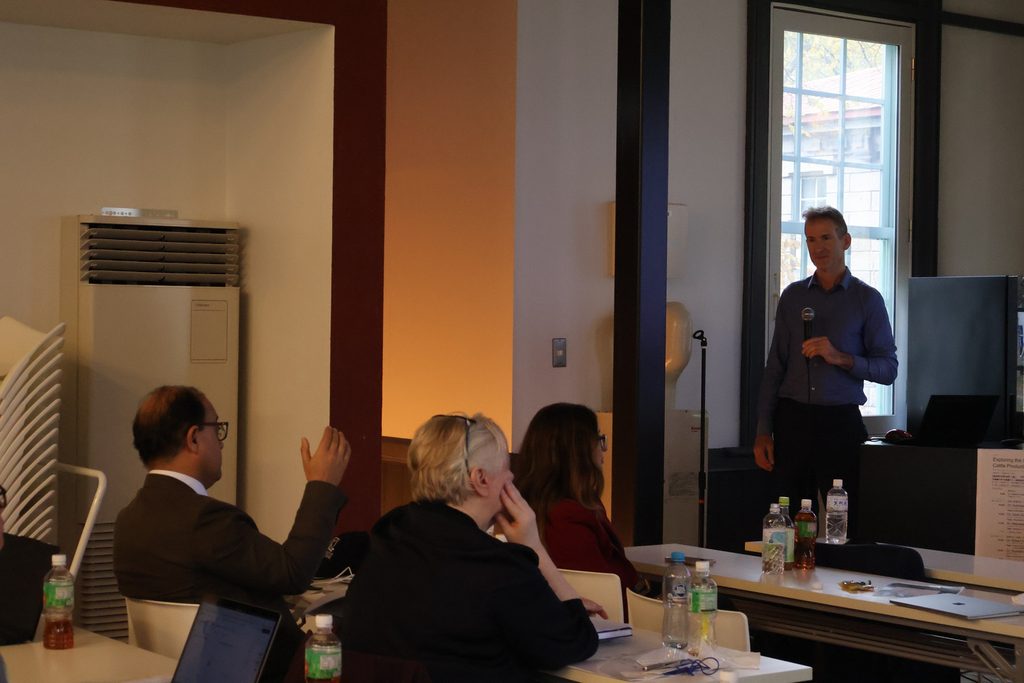
午後のセッションでは、ベイラー医科大学のRobert A. Waterland先生が、発生初期に形成されるDNAメチル化の個体差を示す領域「CoRSIVs」について講演しました。CoRSIVsは複数の組織に共通するメチル化の個体差を示し、初期胚の環境による影響を受けることが報告されています。ヒトの疾患や生殖機能との関連に加え、ウシの受胎率との関連についても研究成果が紹介され、従来の遺伝情報だけでは説明できない家畜の形質を理解する新たな可能性が示されました。
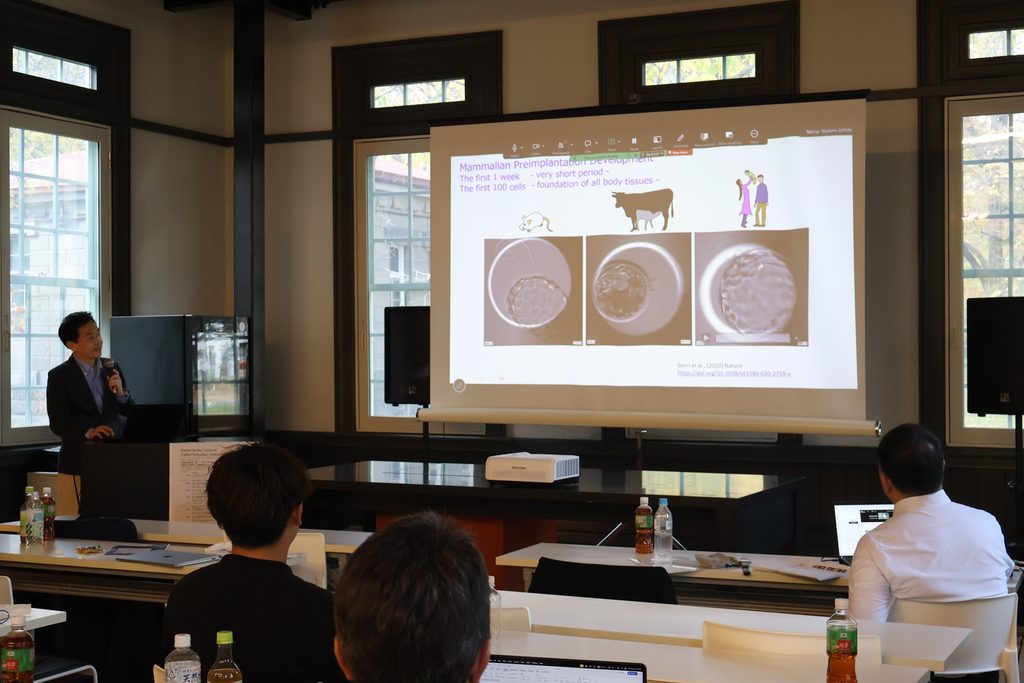
続いて、京都大学の池田俊太郎先生は、着床前胚におけるDNAメチル化やヒストン修飾の動態について講演しました。H3K4me3やH3K27me3などのヒストン修飾と遺伝子発現の関係や、動物種による違いに加え、単一胚のエピジェネティクス解析や、胚の一部の細胞を用いた解析技術が紹介されました。これらの研究は、胚の品質評価や培養技術の改善につながる可能性があります。
Waterland先生および池田先生の研究は、本拠点が追加予算において計画している胚期からのエピジェネティクス研究と密接に関わるものであり、医学・発生生物学の知見をウシの代謝プログラミング研究へ展開するための研究交流の機会となりました。
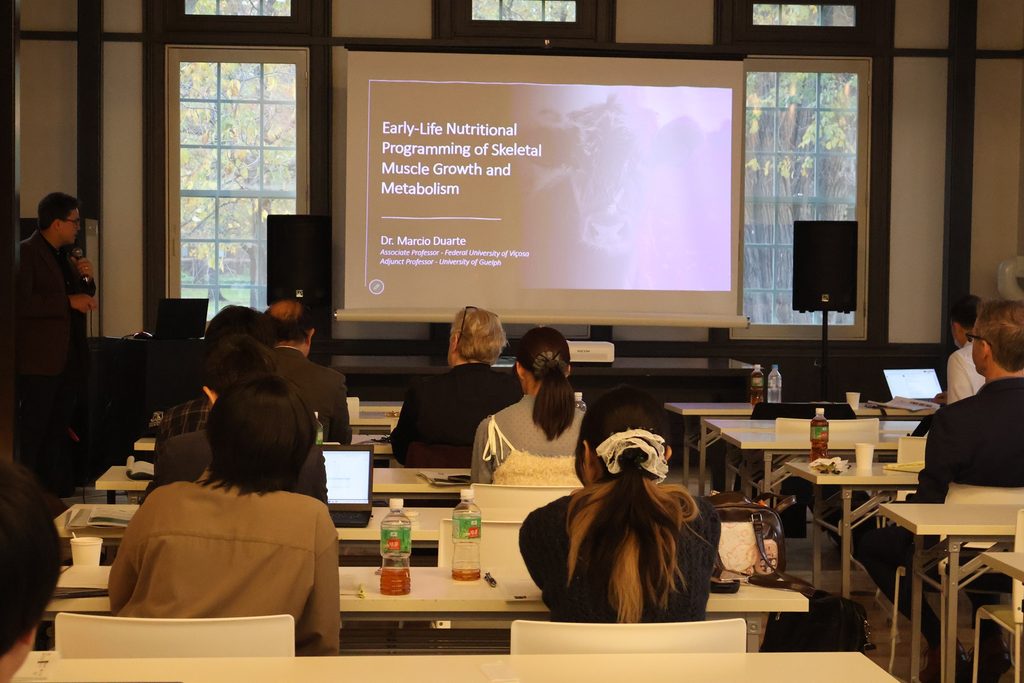
最後のセッションでは、ヴィソーザ連邦大学/ゲルフ大学のDuarte Marcio先生が、胎児期から哺乳期の栄養環境が骨格筋の発達や筋肉内脂肪(霜降り)の形成に及ぼす影響について講演しました。母牛へのビタミンAやグアニジノ酢酸(GAA)の給与、子牛へのクリープフィーディングなどの研究成果が紹介され、肥育期以前の栄養管理による肉質改善の可能性が示されました。
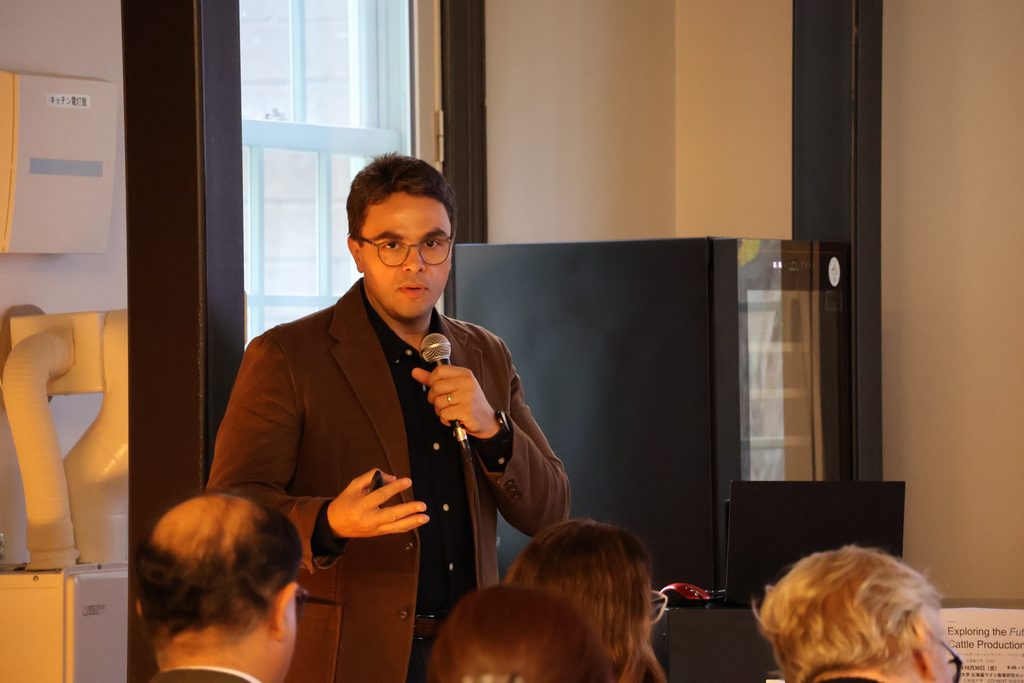
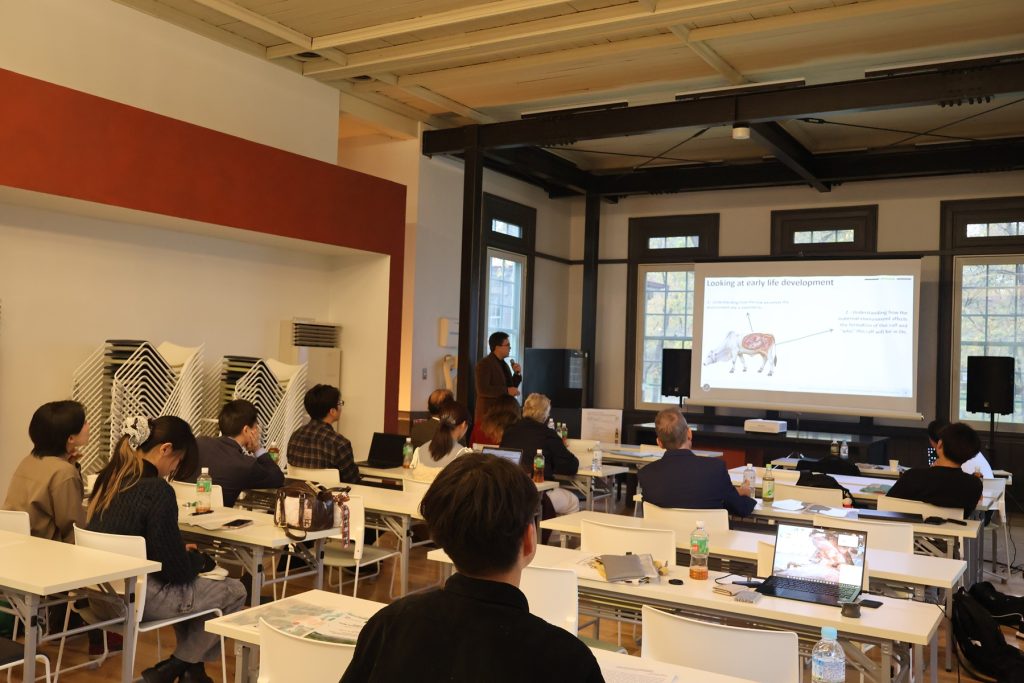
続いて、後藤貴文教授が、本拠点の目指す次世代和牛生産システムについて紹介しました。胎児期や哺乳期の栄養環境などを活用する代謝プログラミング技術によって、牧草主体の飼養でも良好な成長と肉質を実現するグラスフェッド和牛の生産を目指す研究や、センサー等を活用して牛の行動や放牧状況を把握するスマート放牧技術などについて説明しました。
本ワークショップを通じて、持続可能な畜産の実現に向けた多様な研究成果を共有するとともに、医学、発生生物学、畜産学などの分野を横断する研究交流を深めました。今後も国内外の研究機関との連携を推進し、環境負荷の低減と高品質な牛肉生産の両立を目指す研究開発を進めてまいります。
International Workshop “Exploring the Future of Cattle Production” Held at Hokkaido University
On October 30, 2026, the COI-NEXT Center for Next-Generation Wagyu Production Systems at Hokkaido University held an international workshop entitled “Exploring the Future of Cattle Production,” co-organized with Hokkaido University’s J-PEAKS initiative.
The workshop brought together researchers from the United States, Australia, Brazil, Canada, and Japan to share recent research findings and exchange perspectives on sustainable livestock production, meat quality evaluation, epigenetics, and metabolic programming, while exploring opportunities for future research collaboration.
The workshop opened with remarks by Professor Takafumi Gotoh of Hokkaido University, the Project Leader of the COI-NEXT Center, who outlined the importance of sustainable beef production and interdisciplinary international collaboration.
In the first session, Dr. Surinder Singh Chauhan of the University of Melbourne presented research on sustainable livestock production and food security, including the use of plant-derived compounds to reduce methane emissions from livestock and approaches to mitigating heat stress. Dr. Dorin Gupta, also of the University of Melbourne, introduced integrated crop–livestock farming systems, including sheep grazing in Australian wheat fields and sheep-based weed management in Samoan taro fields. Dr. Melindee Hastie, likewise from the University of Melbourne, discussed sustainability certification and consumer trust, eating-quality assessment through Meat Standards Australia (MSA), and research on flavour profiles and consumer emotional responses to grass-fed and grain-fed beef.
In the afternoon session, Dr. Robert A. Waterland of Baylor College of Medicine presented his research on Correlated Regions of Systemic Interindividual Variation (CoRSIVs), genomic regions exhibiting interindividual differences in DNA methylation that are correlated across multiple tissues. These methylation patterns are established during early development and can be influenced by the early embryonic environment. His presentation covered associations with human diseases and reproductive function, as well as findings related to fertility in cattle, highlighting the potential of epigenetic variation to help explain livestock traits that cannot be fully accounted for by genetic variation alone.
Dr. Shuntaro Ikeda of Kyoto University then presented research on DNA methylation dynamics and histone modifications during preimplantation embryonic development. His lecture addressed the roles of H3K4me3 and H3K27me3 in gene regulation, species-specific differences in epigenetic patterns, and technologies for single-embryo epigenetic analysis and embryo biopsy. These approaches may contribute to improved embryo-quality assessment and culture techniques.
The research presented by Dr. Waterland and Dr. Ikeda is closely related to the Center’s planned research collaboration on epigenetics from the embryonic stage, supported through additional COI-NEXT funding. Their participation provided an opportunity to exchange scientific knowledge and explore how advances in medicine and developmental biology could be applied to metabolic programming research in cattle.
In the final session, Dr. Duarte Marcio of the Federal University of Viçosa and the University of Guelph presented research on the effects of fetal and early postnatal nutrition on skeletal muscle development and intramuscular fat deposition (marbling). His lecture introduced findings from studies involving maternal supplementation with vitamin A and guanidinoacetic acid (GAA), as well as creep feeding of calves, highlighting the potential to improve beef quality through nutritional management before the finishing stage.
Professor Gotoh concluded the research presentations by introducing the Center’s vision for next-generation Wagyu production systems. He outlined research aimed at producing grass-fed Wagyu cattle capable of achieving favorable growth and meat quality under forage-based feeding systems through metabolic programming approaches involving nutritional conditions during fetal and early postnatal development. He also introduced smart grazing technologies that use sensors and other tools to monitor cattle behaviour and grazing conditions.
The workshop provided a valuable opportunity to share diverse research findings and strengthen interdisciplinary exchanges across medicine, developmental biology, and animal science. The Center will continue to promote collaboration with domestic and international research institutions to advance sustainable beef production systems that combine high-quality meat production with reduced environmental impacts.