

京都大学にて国際セミナー「Exploring the Future of Cattle Production」を開催しました
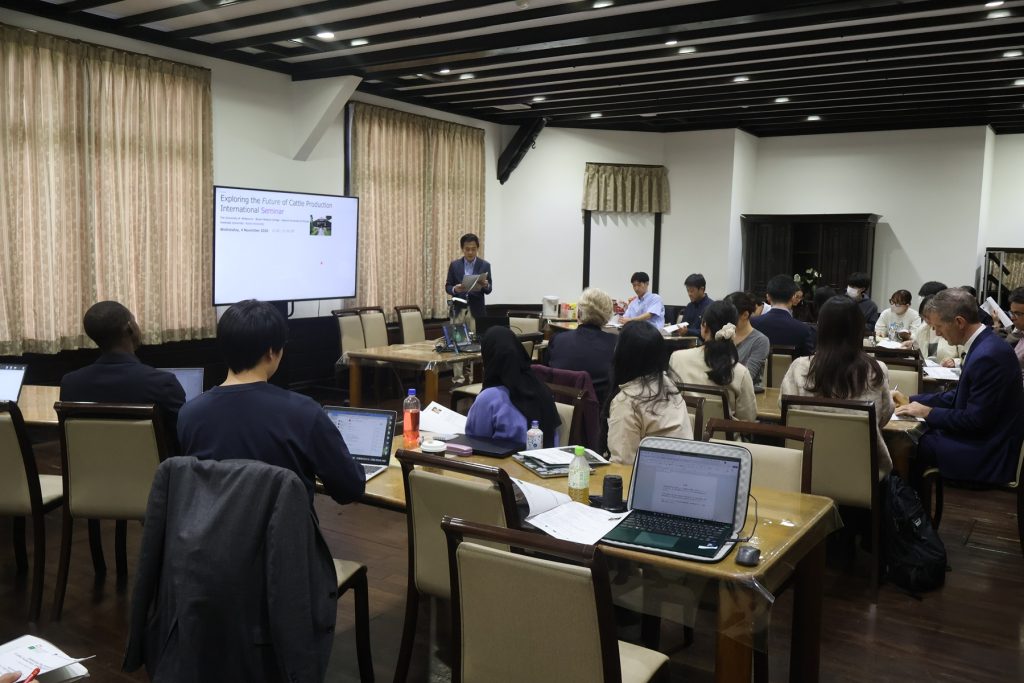
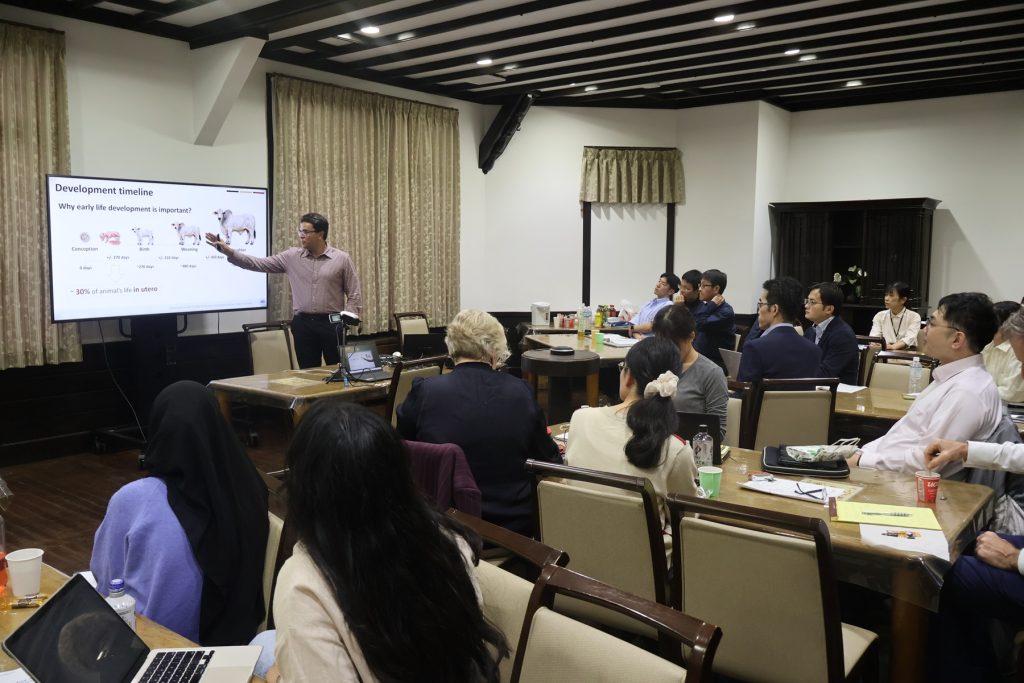
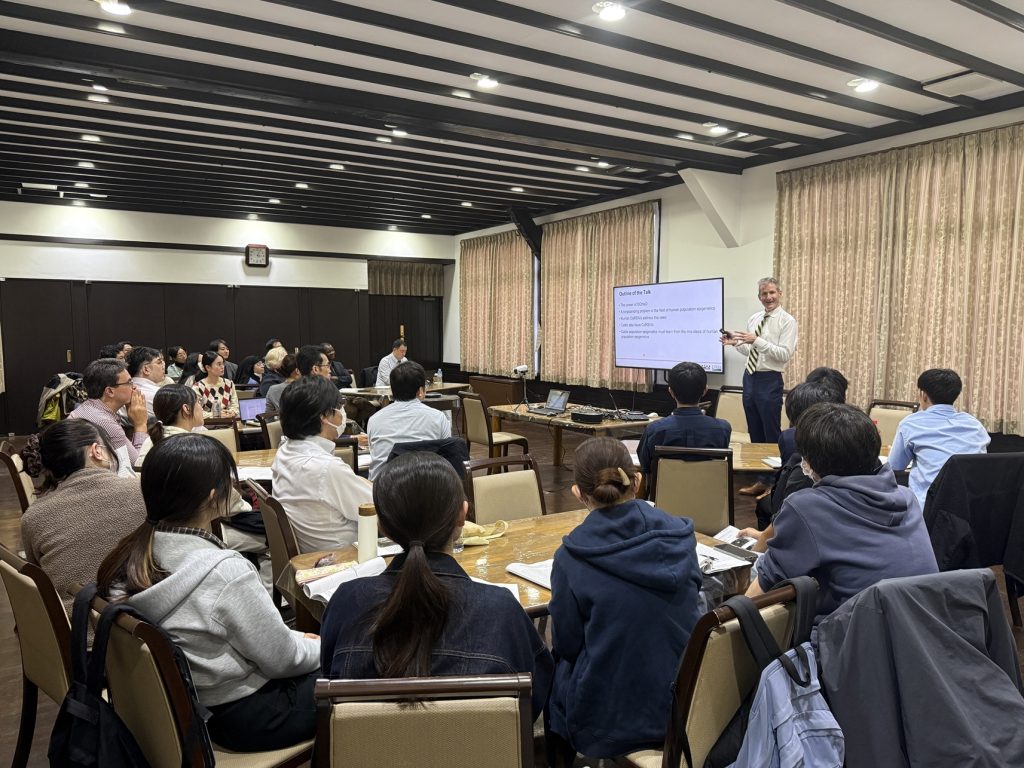
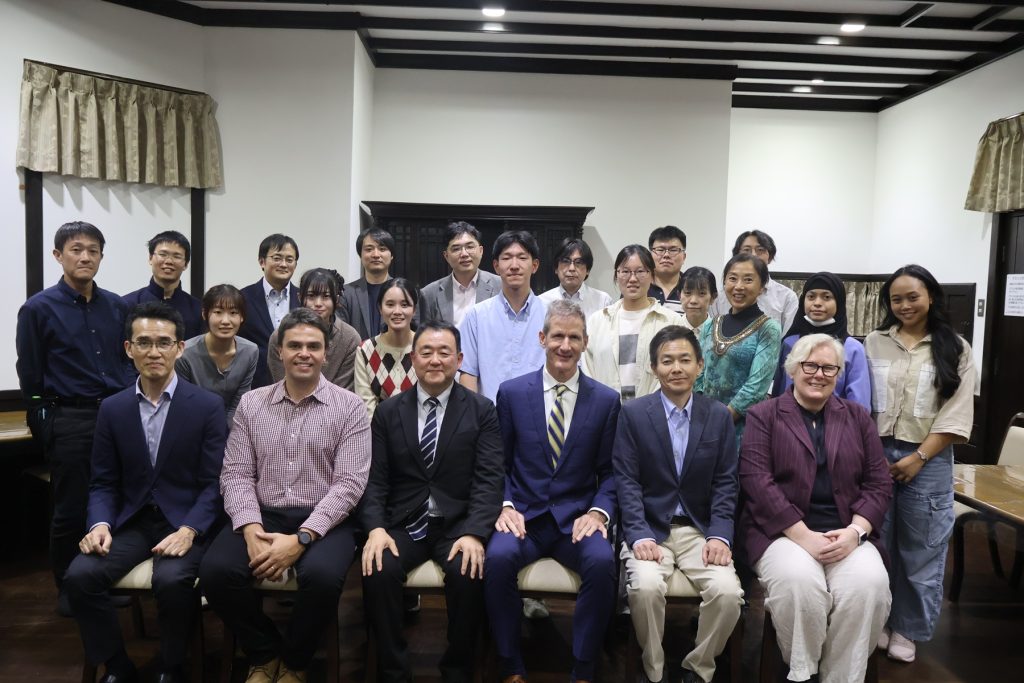
2026年11月4日(水)、京都大学の旧演習林事務室において、国際セミナー「Exploring the Future of Cattle Production International Seminar」を開催しました。
本セミナーには、オーストラリア、米国、ブラジル、日本の研究者が参加し、持続可能な牛肉生産、肉質評価、エピジェネティクス、代謝プログラミングなどをテーマに、6件の研究発表が行われました。
京都大学の池田俊太郎先生による開会挨拶の後、3つのセッションに分かれて講演が進められました。
持続可能な牛肉生産への取り組み
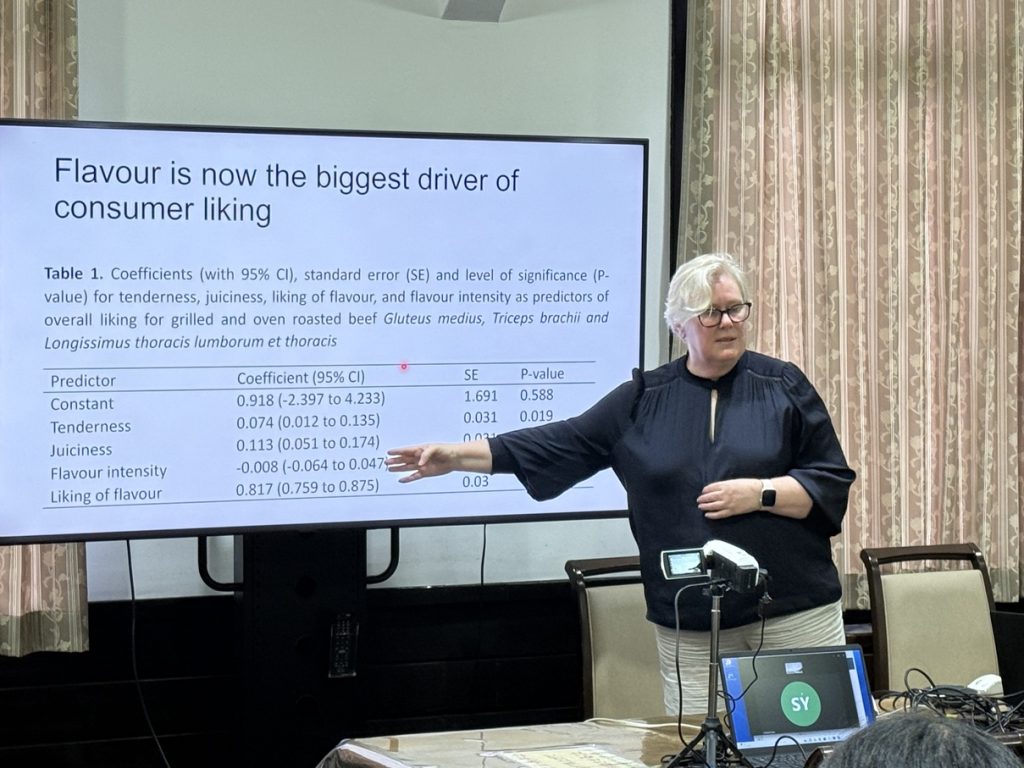
メルボルン大学(オーストラリア)のMelindee Hastie先生は、オーストラリアにおける持続可能な牛肉生産について講演しました。牛肉の品質や消費者による評価に着目し、おいしさを構成する要素や、持続可能な生産方法に対する消費者の認識について紹介しました。また、生産現場での取り組みを消費者の価値観と結びつけることの意義について説明しました。
血液中マイクロRNAを活用した枝肉形質の予測
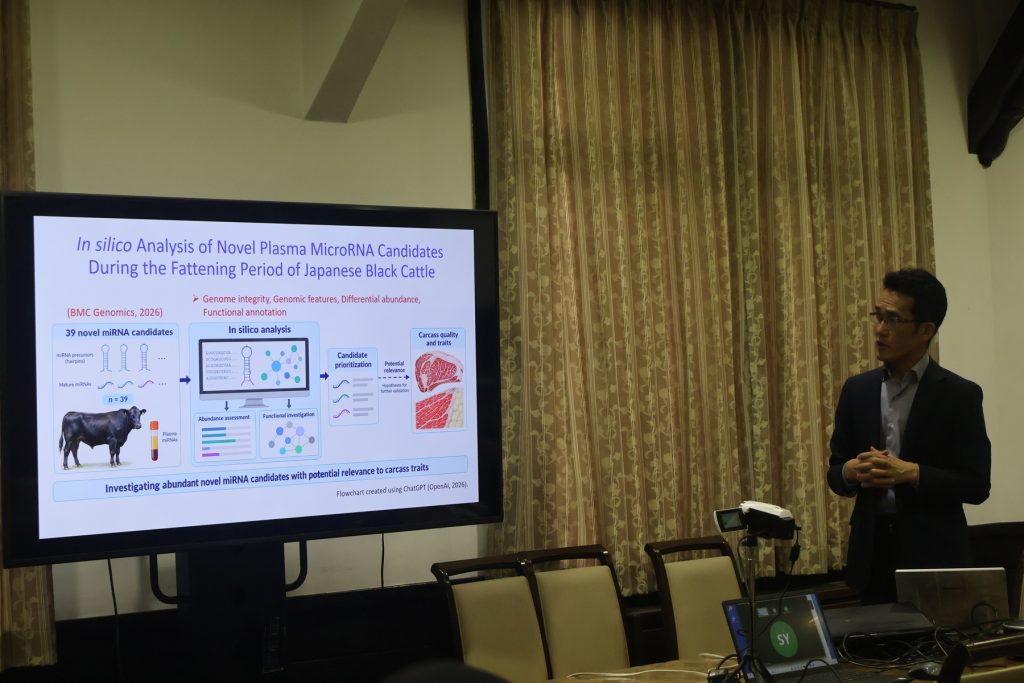
京都大学の横井伯英教授は、血漿中のマイクロRNAを用いた肉用牛の枝肉形質予測について講演しました。マイクロRNAは遺伝子の働きを調節する小さなRNAであり、血液中に存在するものを分析することで、生体内の状態を把握する手がかりとなります。こうした分子情報を枝肉形質の予測に活用する研究について紹介しました。
エピジェネティクスと発育期の環境による長期的な影響
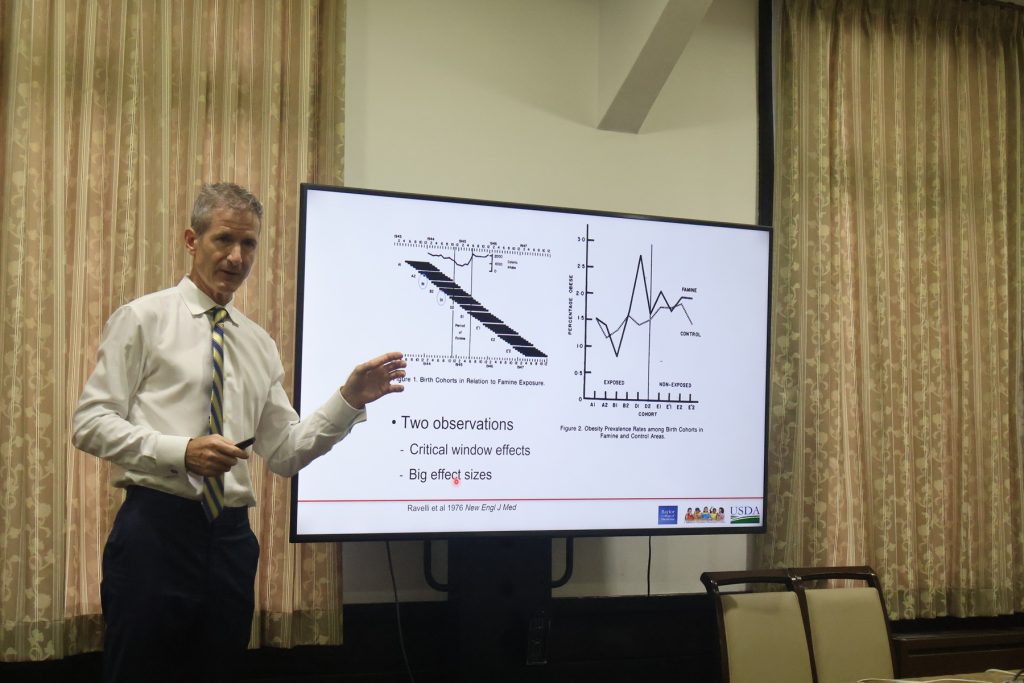
ベイラー医科大学(米国)のRobert A. Waterland先生は、個体間にみられるエピジェネティックな違いと、発育期の環境がその後の個体に及ぼす影響について講演しました。特に、DNAメチル化など、DNAの塩基配列を変えずに遺伝子の働きを調節する仕組みに着目し、発育期に形成される個体差の理解や、将来的なウシの形質予測への応用について紹介しました。
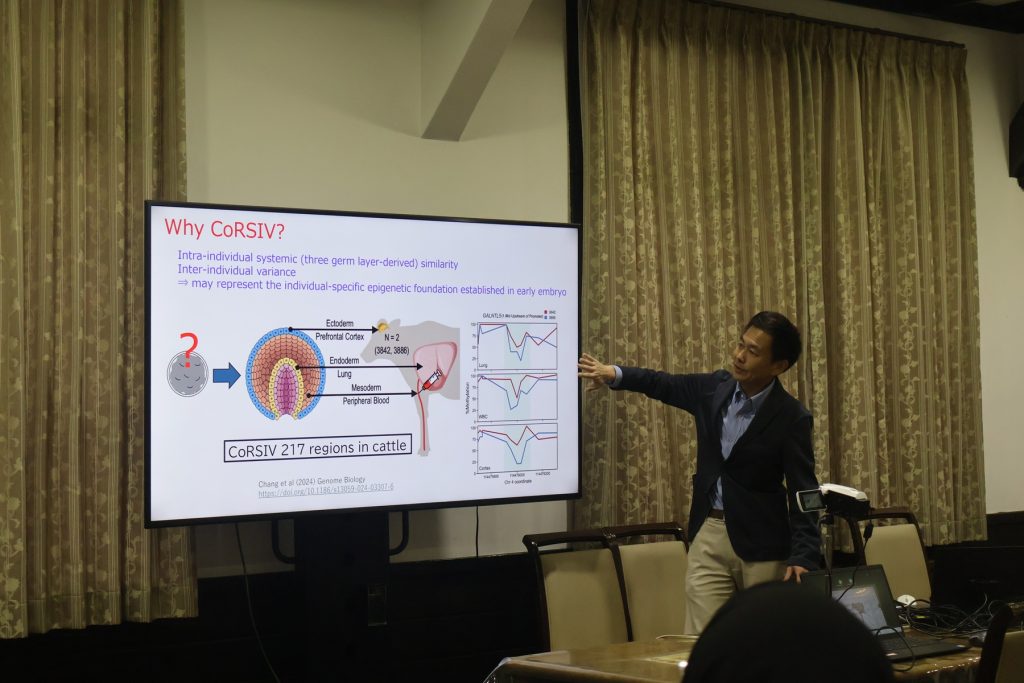
ウシ胚におけるエピゲノムの多様性
京都大学の池田俊太郎教授の研究グループからは、ウシ胚におけるエピゲノムの多様性について研究成果が紹介されました。受精卵の初期発生では、細胞分裂や分化に伴って遺伝子の働きが変化します。こうした発生過程におけるエピジェネティックな状態の違いに着目し、胚の発生と遺伝子発現の調節との関係について説明しました。
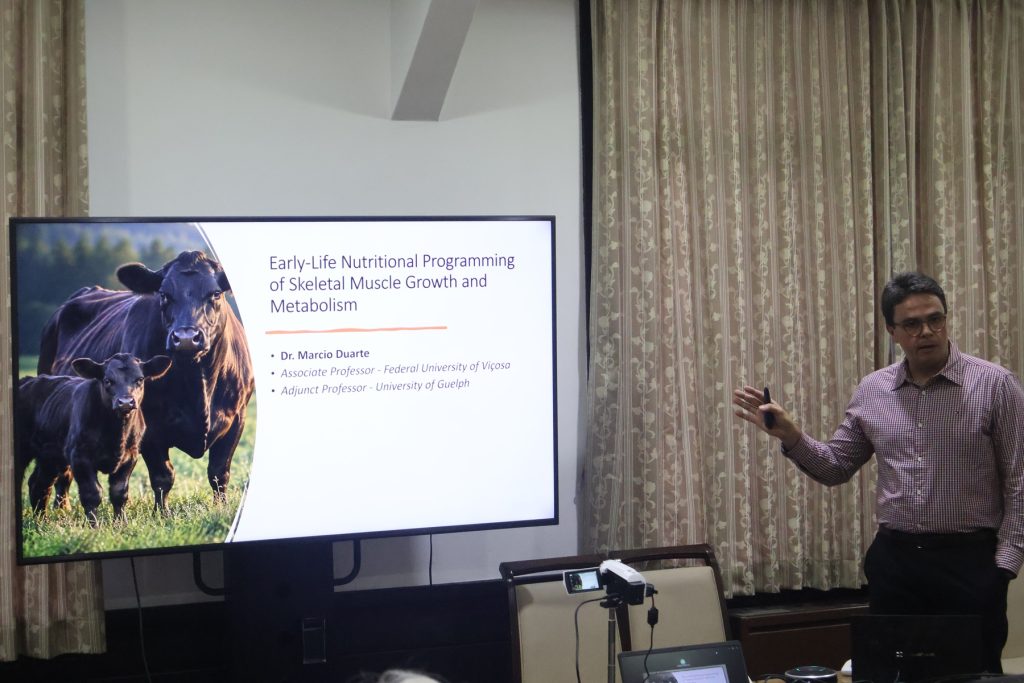
発育初期の栄養環境と筋肉・代謝への影響
ヴィソーザ連邦大学(ブラジル)・ゲルフ大学(カナダ)のDuarte Marcio先生は、発育初期の栄養環境が骨格筋の成長や代謝に及ぼす影響について講演しました。妊娠期の母牛の栄養状態が、子牛の筋肉形成や脂肪蓄積に関係することを取り上げ、出生前後の栄養管理によって、その後の成長や肉質に働きかける研究について紹介しました。
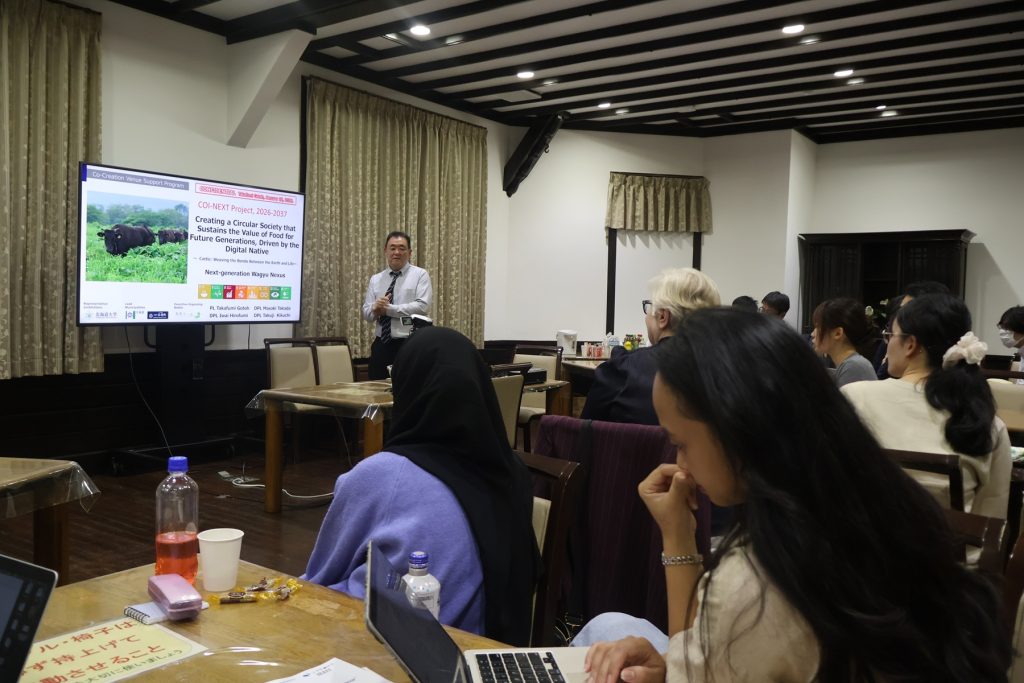
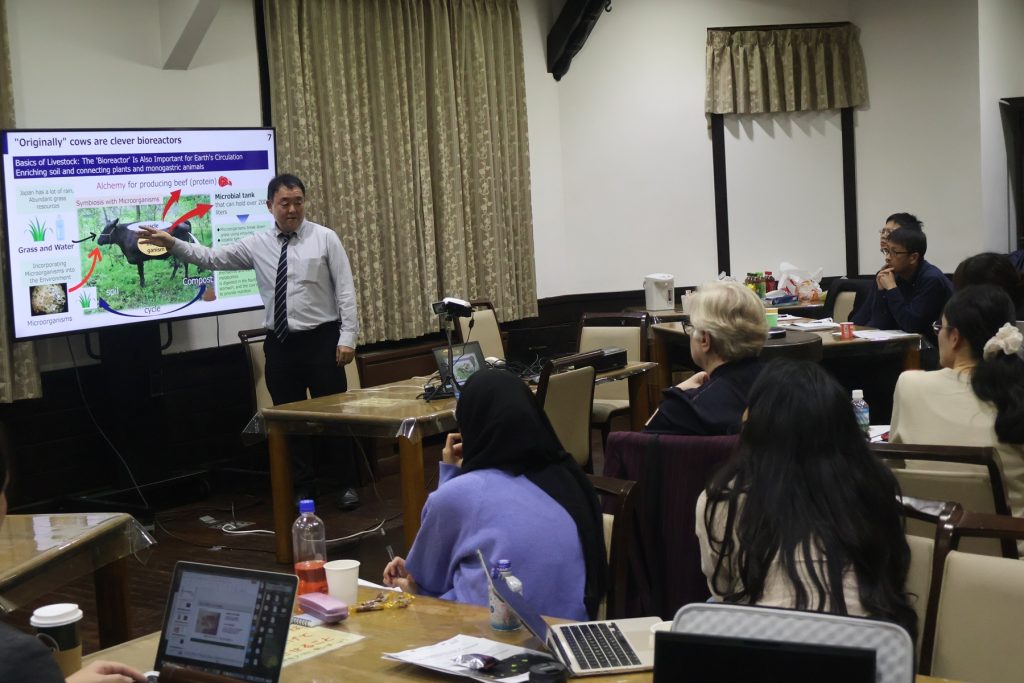
代謝プログラミングによるグラスフェッド和牛生産の可能性
北海道大学の後藤貴文教授は、代謝プログラミング技術を活用したグラスフェッド和牛生産について講演しました。胎児期や哺乳期の栄養環境などが、その後の成長や肉質に及ぼす影響について研究成果を紹介しました。また、これまでの研究で、代謝プログラミングを施した牛は通常の粗飼料肥育牛よりオレイン酸の割合が高い結果が得られたことにも触れ、牧草資源を活用した持続可能な牛肉生産の可能性について説明しました。
研究分野を越えた交流と新たな連携の可能性
今回のセミナーでは、各講演を通じて研究成果を共有するだけでなく、研究者同士が直接意見を交わすことで、それぞれの研究の共通点や新たな可能性を見いだす貴重な機会となりました。
特に、Waterland先生が取り組むエピジェネティクス研究と、池田先生の研究には共通する視点があり、両先生が直接交流することで、研究分野を越えたつながりが生まれました。後藤教授にとっても、両先生をつなぐ機会となったことは、今回のセミナーの大きな成果の一つとなりました。
研究者が一堂に会し、それぞれの研究について直接説明し、意見を交わすことで、資料や論文だけでは得られない気づきや理解が生まれます。今回の交流は、対面での議論の意義を改めて実感するとともに、今後の共同研究や研究交流の発展につながる有意義な機会となりました。
本拠点では、こうした国内外の研究者との交流を大切にしながら、代謝プログラミング技術を活用したグラスフェッド和牛の生産と、持続可能な和牛生産システムの構築に向けた研究開発を進めてまいります。
International Seminar “Exploring the Future of Cattle Production” Held at Kyoto University
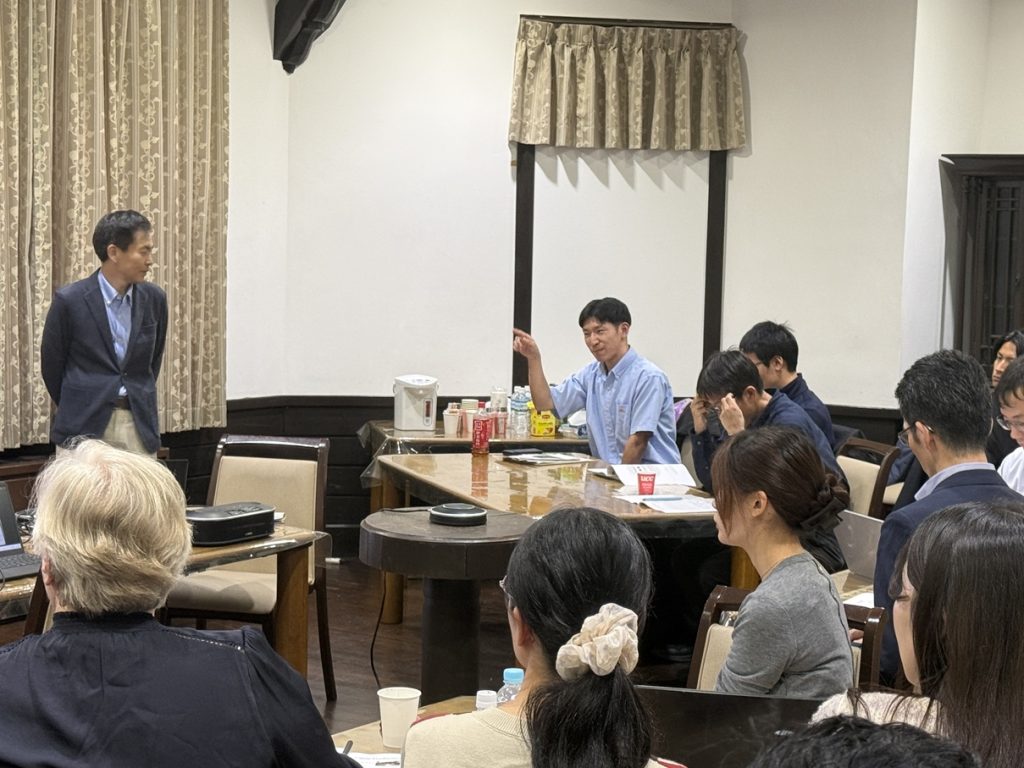
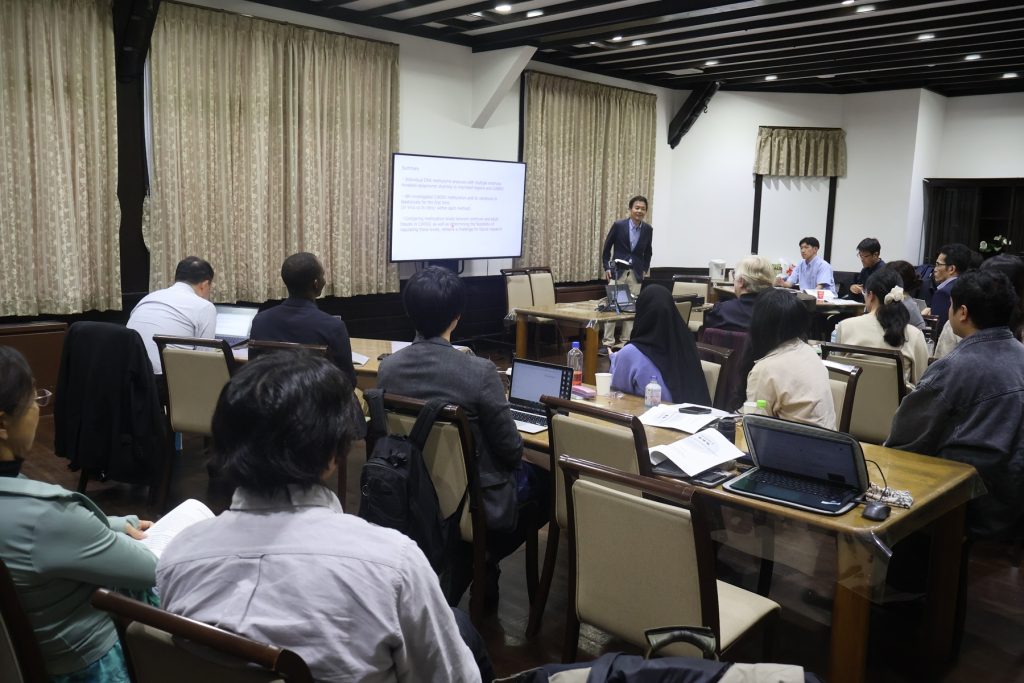
On Wednesday, November 4, 2026, the international seminar “Exploring the Future of Cattle Production” was held at the Former Head Office of Forest Research Station, Kyoto University.
The seminar brought together researchers from Australia, the United States, Brazil, and Japan for six research presentations covering sustainable beef production, meat quality assessment, epigenetics, and metabolic programming.
Following opening remarks by Professor Shuntaro Ikeda of Kyoto University, the seminar proceeded with three sessions.
Approaches to Sustainable Beef Production
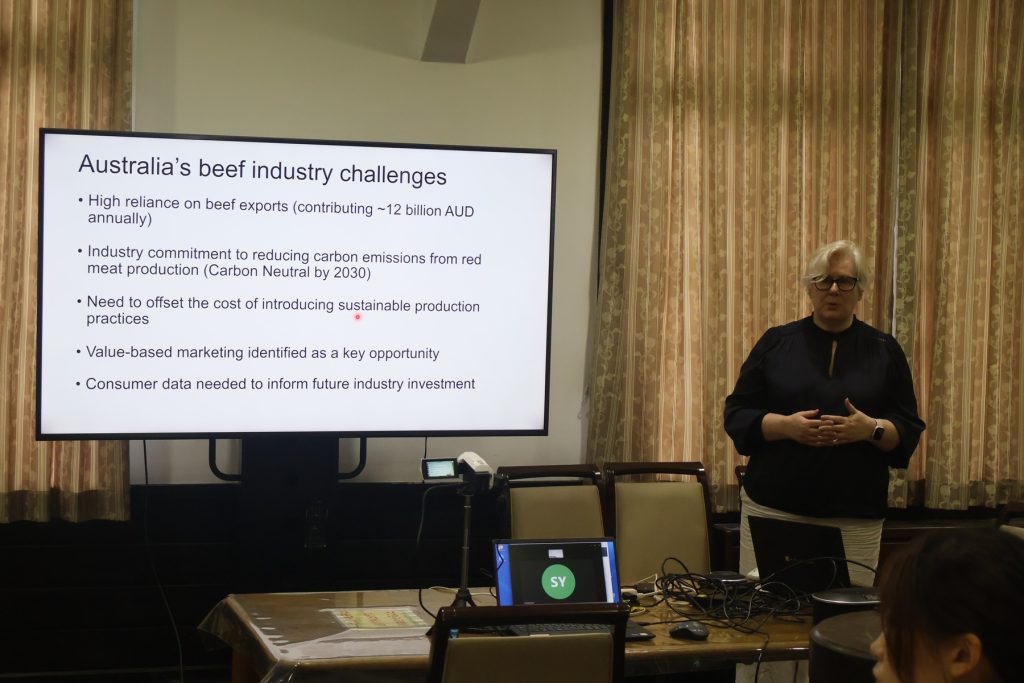
Dr. Melindee Hastie of the University of Melbourne, Australia, presented research on sustainable beef production in Australia. Her presentation focused on beef quality and consumer perceptions, highlighting the factors that contribute to eating quality and how consumers perceive sustainable production practices. She also discussed the importance of connecting on-farm practices with consumer values and expectations.
Predicting Carcass Traits Using Circulating MicroRNAs
Dr. Norihide Yokoi of Kyoto University, Japan, presented research on predicting carcass traits in beef cattle using plasma microRNAs. MicroRNAs are small RNA molecules that regulate gene expression, and those circulating in the blood may provide valuable information about physiological conditions. His presentation introduced research exploring the potential of these molecular markers as tools for predicting carcass characteristics in beef cattle.
Epigenetics and the Long-Term Effects of Early Developmental Environments
Dr. Robert A. Waterland of Baylor College of Medicine, USA, discussed interindividual epigenetic variation and the long-term effects of environmental conditions during early development. His presentation focused on mechanisms such as DNA methylation, which regulate gene expression without altering the underlying DNA sequence. He also introduced the potential of understanding epigenetic differences established during development as a new approach to predicting traits in cattle.
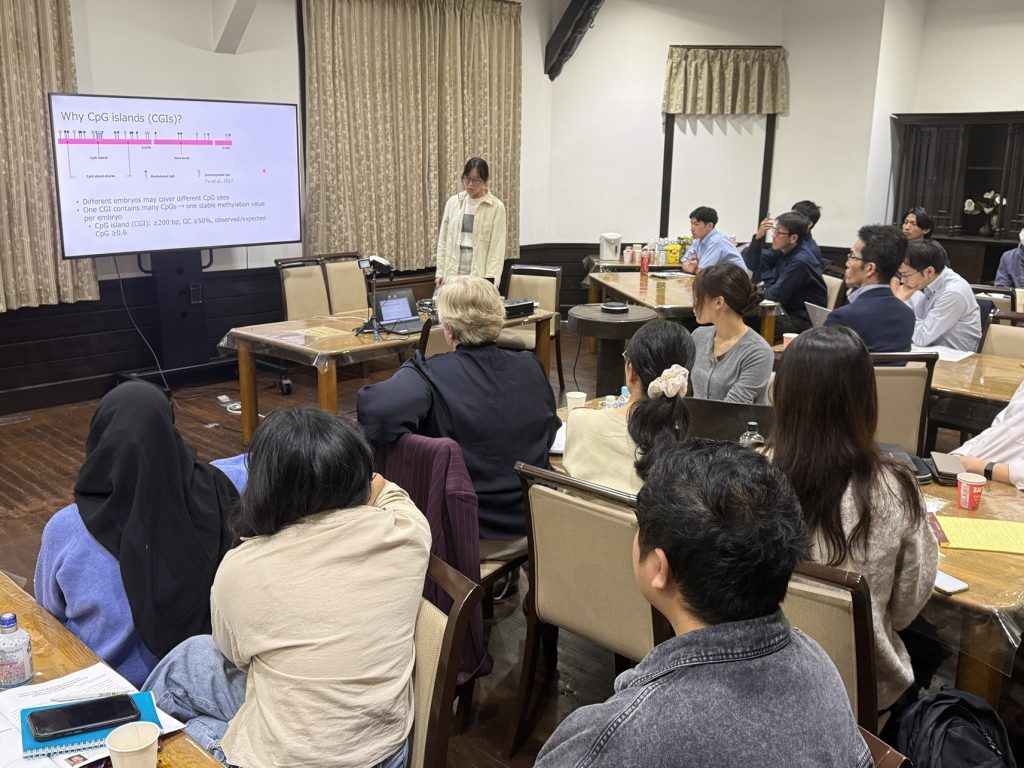
Epigenomic Diversity in Cattle Embryos
Professor Shuntaro Ikeda’s research group at Kyoto University presented findings on epigenomic diversity in cattle embryos. During early embryonic development, patterns of gene regulation change as cells divide and differentiate. The presentation focused on variations in epigenetic states during these developmental processes and explored the relationship between embryonic development and the regulation of gene expression.
Effects of Early-Life Nutrition on Skeletal Muscle Growth and Metabolism
Dr. Duarte Marcio, affiliated with the Federal University of Viçosa, Brazil, and the University of Guelph, Canada, presented research on the effects of early-life nutrition on skeletal muscle development and metabolism in cattle. His presentation addressed how maternal nutritional conditions during pregnancy influence muscle development and fat deposition in offspring. He also discussed research exploring how nutritional management during prenatal and early postnatal development may influence subsequent growth and meat quality.
Potential of Metabolic Programming for Grass-Fed Wagyu Production
Professor Takafumi Gotoh of Hokkaido University, Japan, presented research on the potential of metabolic programming technologies for grass-fed Wagyu production. He introduced findings on how nutritional conditions during fetal and suckling periods can influence subsequent growth and meat quality. He also discussed previous research showing that cattle subjected to metabolic programming exhibited a higher proportion of oleic acid than cattle raised on conventional roughage-based diets, highlighting the potential for sustainable beef production through the effective use of pasture resources.
Research Exchange Across Disciplines and Opportunities for Future Collaboration
The seminar provided a valuable opportunity not only to share research findings but also for researchers to engage in face-to-face discussions, identify connections between their respective fields, and explore new possibilities for future research.
Of particular interest was the connection between Dr. Waterland’s research on epigenetics and Professor Ikeda’s research. Their direct interaction provided an opportunity to recognize shared scientific interests and establish connections across research disciplines. For Professor Gotoh, bringing these researchers together was also one of the meaningful outcomes of the seminar.
When researchers meet in person to explain their work and exchange ideas, they can gain insights and develop a deeper understanding that may not emerge from reading publications or reviewing presentation materials alone. This seminar reaffirmed the value of face-to-face scientific discussions and provided a meaningful opportunity to foster future research exchanges and potential collaborations.
Our research center will continue to strengthen relationships with researchers and institutions in Japan and abroad while advancing research and development toward grass-fed Wagyu production using metabolic programming technologies and the establishment of sustainable Wagyu production systems.